
Late September and October are the traditional time for fermenting cabbage. Dense late heads are already at the markets, and a batch of sauerkraut lasts all winter: for salads, bigos and soups.
The recipe was shared by the Polish food publication Kwestia Smaku, and its key tips come from a mum who ferments cabbage exactly this way.
The quantities are for a big batch — ten kilograms of cabbage. If you need less, scale it down: for every kilo of cabbage, 100 grams of carrots and a tenth of a glass of salt.
What you need
- white cabbage, thinly shredded — 10 kg;
- carrots — 1 kg;
- rock salt (for preserving) — 1 glass;
- optional — 2 tsp caraway seeds and 2–3 apples.
How to make it
1. Shred the cabbage. Wash the cabbage, remove 2–3 damaged outer leaves, cut it into quarters and cut out the core. Shred the rest thinly.
2. Add the carrots and salt. Peel the carrots and grate them coarsely. Put the vegetables in a large bowl and add the salt and, if you like, the caraway and apples, peeled, quartered and cored.
 Photo: Aw58 / Wikimedia Commons, CC BY 4.0
3. Pack it down. Mix everything and pack it down very thoroughly so the cabbage releases its juice. Repeat twice more — after half an hour and after an hour.
4. Leave it to ferment. Transfer the cabbage to a plastic bag, tie it and weigh it down well — for example with one-kilo packs of salt or a stone. Keep it in the kitchen for a month and a half. Every week, press the cabbage with the narrow end of a wooden spoon to let the fermentation gases escape. The cabbage must stay covered with brine the whole time.
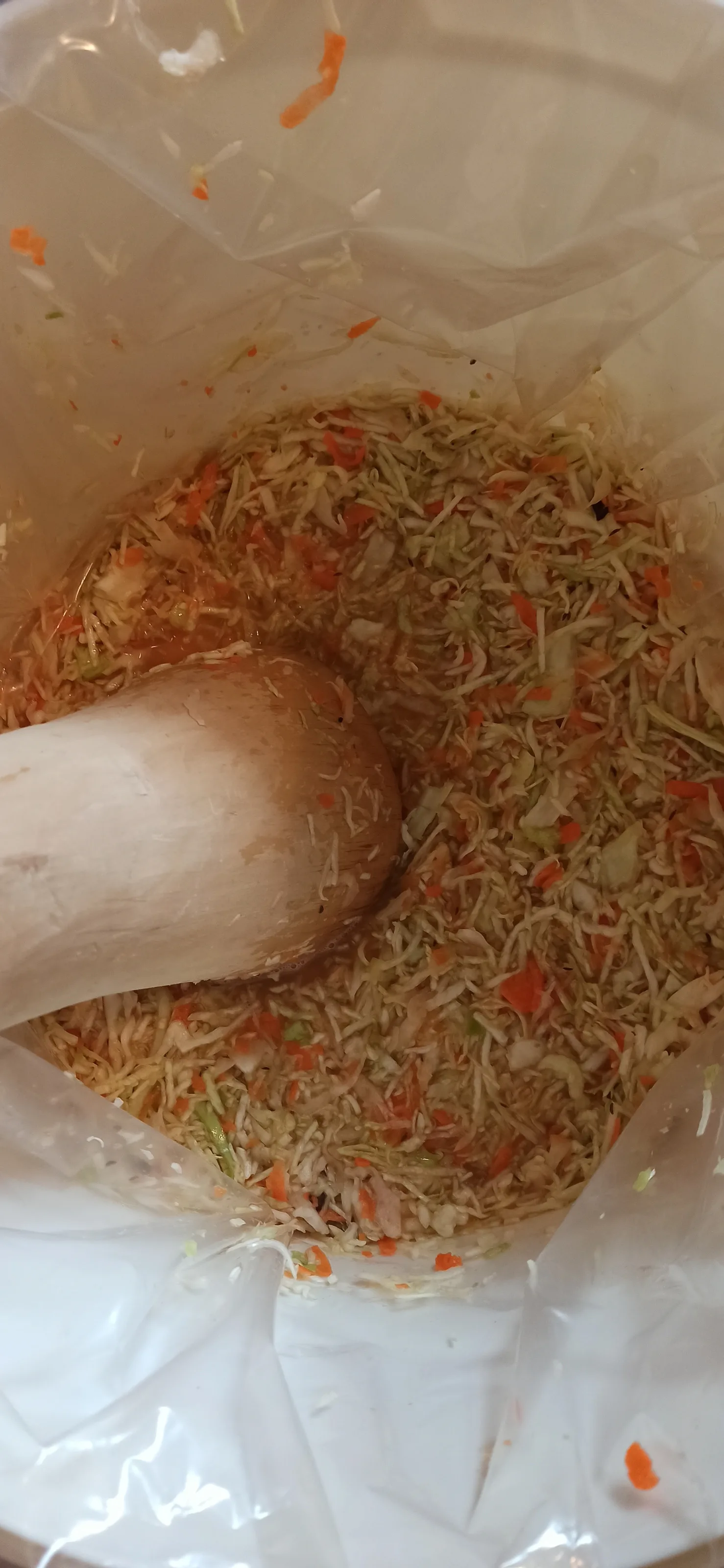 Photo: Aw58 / Wikimedia Commons, CC BY 4.0
5. Jar it. Remove the apples, if used. Transfer the sauerkraut to jars and cover it completely with brine, leaving 2–3 cm of space at the top: fermentation continues, the gas pushes the juice up and the lid may leak.
6. Store it. Put the jars in a cellar and use the sauerkraut for salads, bigos and soups.
Kwestia Smaku advises against stoneware barrels: in a barrel the juice sinks to the bottom, the cabbage on top darkens and may spoil, so you have to keep adding brine. In a bag it is easier to keep the cabbage evenly covered, to mix it and to weigh it down.
The salt for sauerkraut must be rock salt — evaporated salt will not do. And to avoid shredding ten kilos at home, you can buy freshly shredded cabbage at the market.
As a reminder, last time in Tasty Bucha we made apple fritters that need no yeast.
Nota bene
Bucha FM is an independent news site and station for the Bucha district. We cover what matters to the community, and we work for you — and because of you. Joining the people who make this possible is simple: support us with any amount.

Comments
No comments yet — be the first.