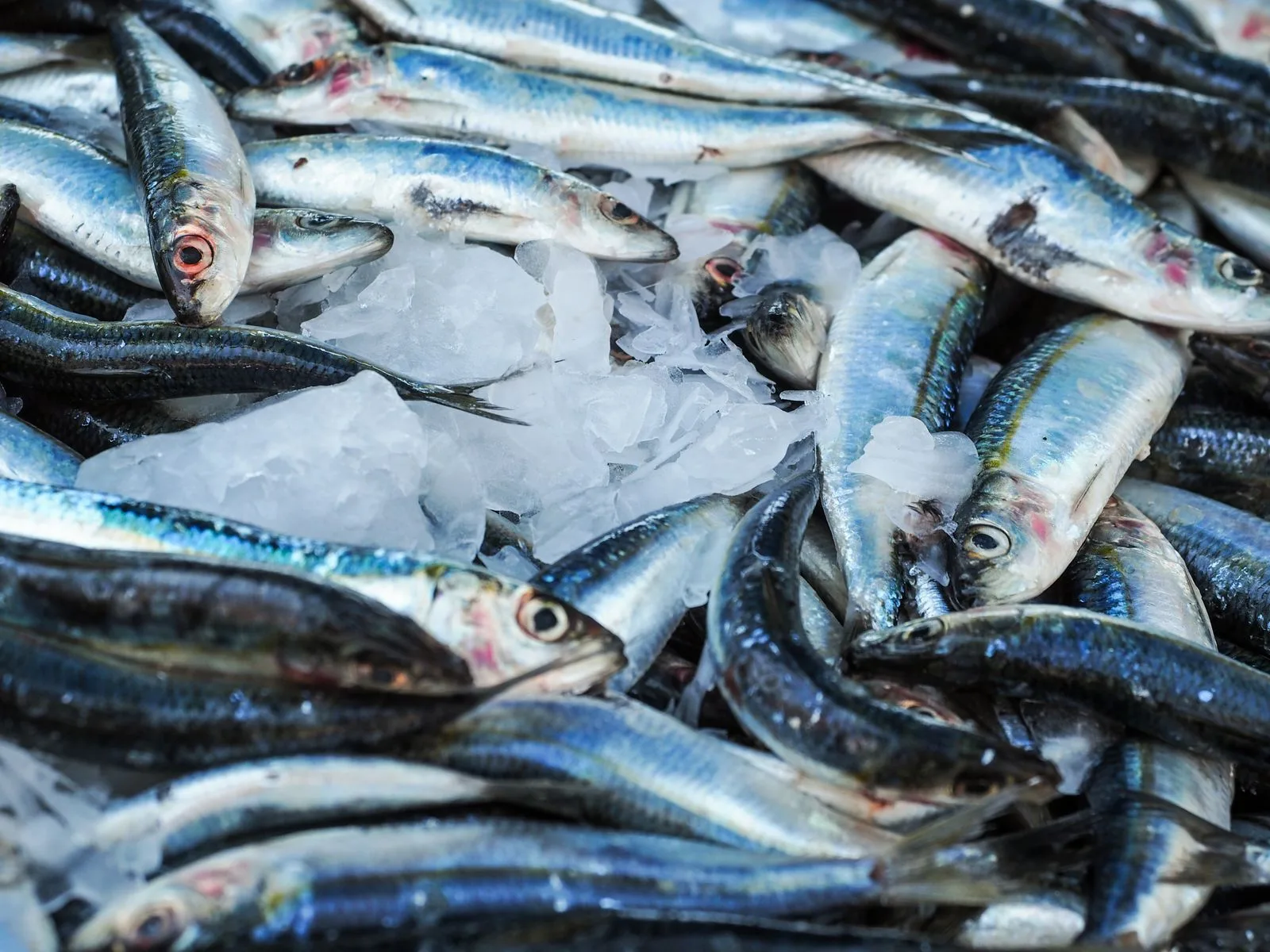
Dunaika reaches the table once a year and not for long. It is a migratory fish: it spends most of its life in the Black Sea and enters the Danube in spring to spawn. It is caught during this short window — further upstream the fish stops feeding in fresh water and rapidly loses its fat.
The fishery, the fishermen's earnings and the prices are covered in a report by TSN.
35 per cent fat against 15 in maatjes
The main advantage of dunaika is its fat content. According to TSN, fat makes up about 35 per cent of the fish's mass. By comparison, the famous Dutch maatjes has roughly 15 per cent. The difference is more than twofold, and the whole flavour of salted fish rests on fat.
The fattest are caught at Vylkove, where the Danube flows into the Black Sea. This is the start of the spawning route: the fish has just come in from the sea and has not yet spent its reserves. The further upstream, the leaner the catch.

Not a separate species, but a local name
One point is worth clarifying, as sellers often omit it. "Danube herring" is not a separate biological species but a common name for the Azov–Black Sea migratory shad that spawns specifically in the Danube. Scientifically it is Alosa immaculata.
Yet the claim that "it is the same herring" is also wrong. The Atlantic herring shipped from Norway belongs to a different genus. So dunaika is not a premium version of imported herring but simply a different fish that lives next door to us.
510 tonnes for everyone — and not a single farm
The state caps the catch: the quota is set annually and stands at 510 tonnes for the whole season. The reason is straightforward — take more, and there will be nothing left to spawn next spring.
Dunaika is not farmed: no farms for this fish exist, and the fishery is entirely wild. Around fifteen fishing companies and 350 boats operate near Vylkove. Over the two months of the season a fisherman may earn up to two thousand dollars — or nothing at all, depending on how the fish runs.
Why you do not see it in our shops
For years dunaika could be bought only in the Odesa region: a middleman collected it from the river and took it to the nearest market. At retail in Odesa a fish costs around one hundred hryvnias, or eighty if you haggle.
Herring, meanwhile, remains the fish Ukrainians buy most, and almost all of it is imported. According to industry publications, back in 2017 imports reached about 60 thousand tonnes a year, and Ukraine was Europe's largest buyer of Norwegian herring. Against that figure, 510 tonnes of dunaika is a drop — which is why shops in the Bucha district are far more likely to stock Norwegian fish than our own.


Comments
No comments yet — be the first.