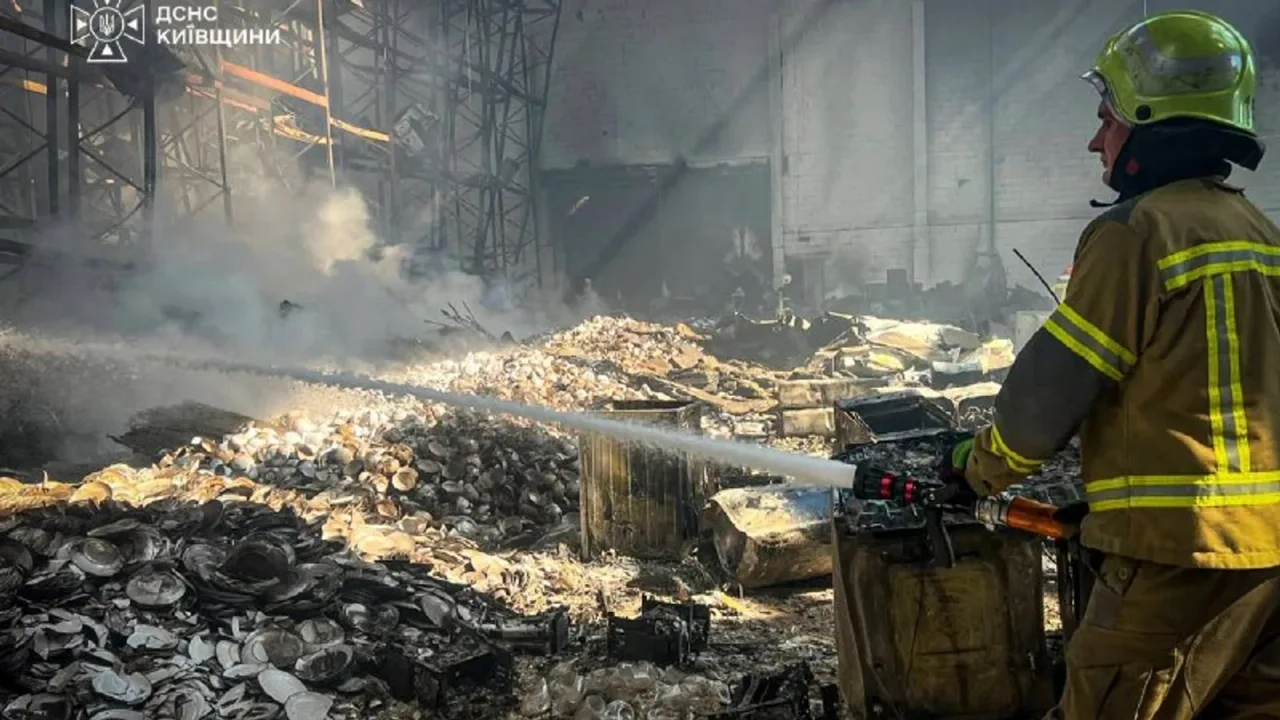
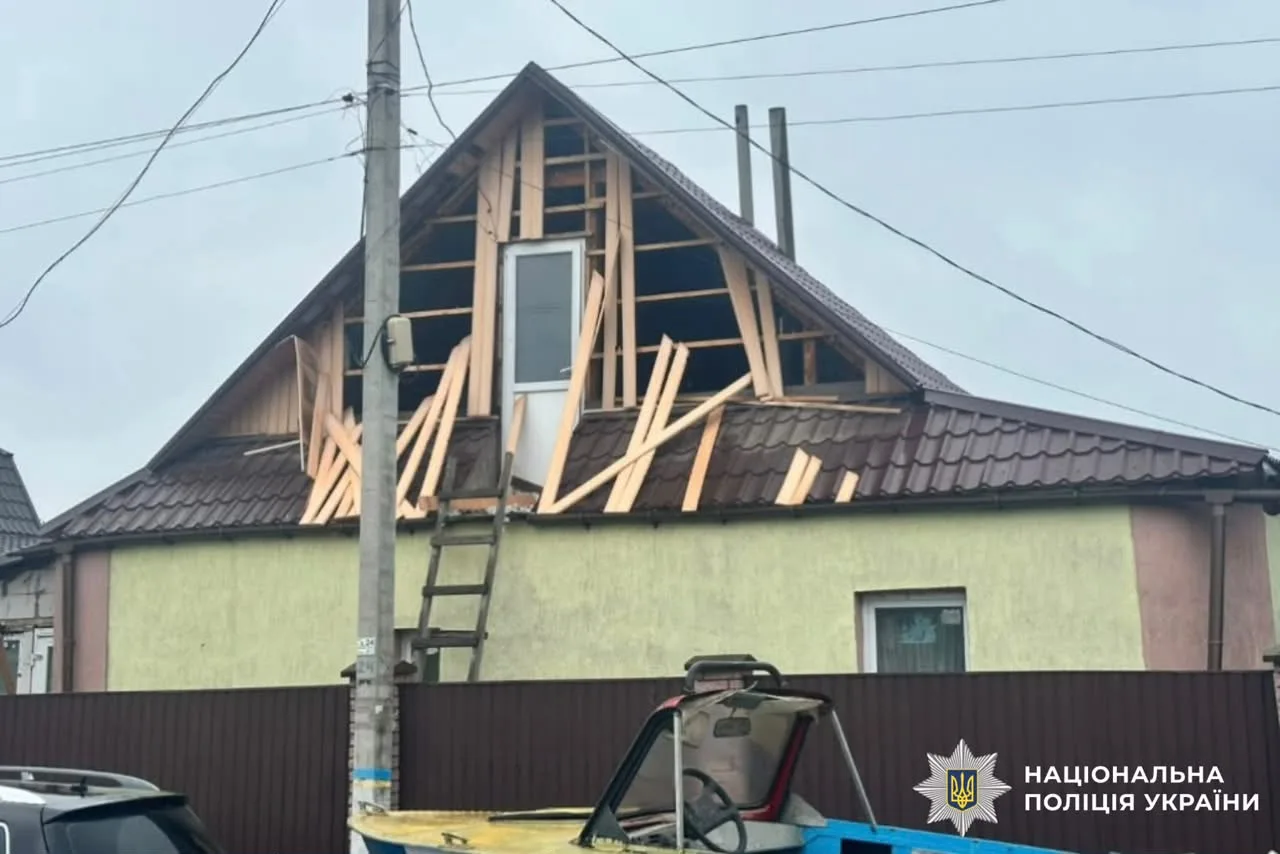
The strike hit a civilian facility: the warehouse complex of a logistics company in the Brovary district. A 65-year-old man was wounded by shrapnel and taken to hospital.
The response was reported by the State Emergency Service of Ukraine.
Fought from the air — 34 tonnes of water
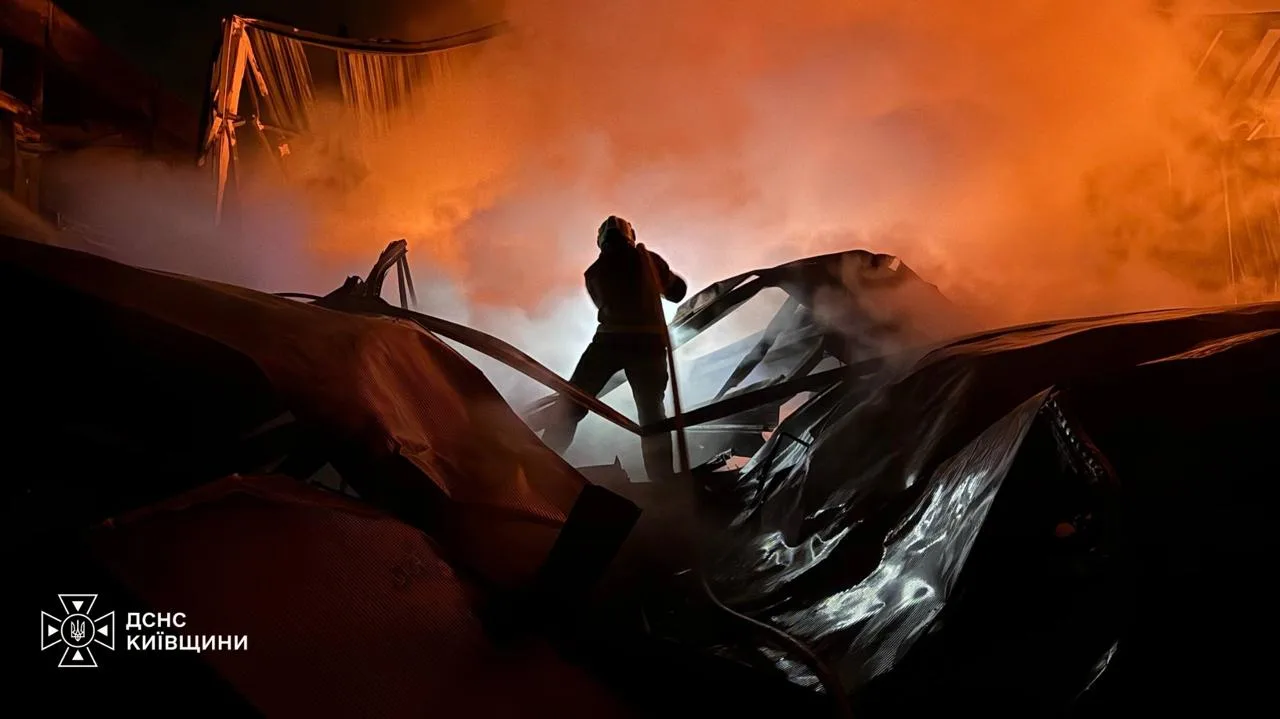
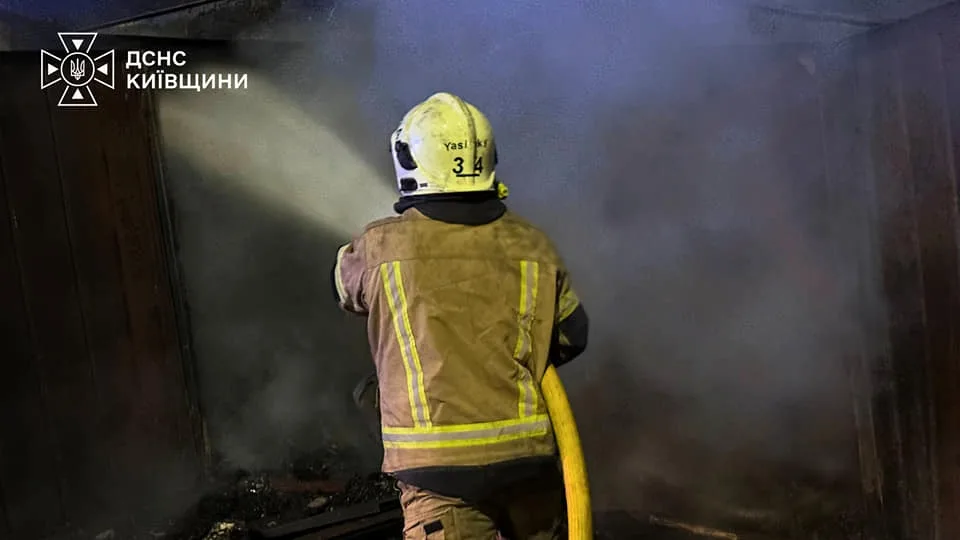
The fire was large enough to require emergency service aviation: it made 17 drops and released 34 tonnes of water onto the flames. Units from the Kyiv region, the capital and additional forces from other regions worked at the scene.
The work was hampered by repeated air raid alerts: with further strikes threatened, crews had to suspend firefighting and move to shelter, returning once the all-clear sounded. That day the alert lasted from 12:54 to 14:38.
Who the warehouse served
The company handles deliveries for ATB, Metro, NOVUS, Auchan and Silpo, and also operates on European routes. So this is not one chain's warehouse but a shared contractor through which goods for several retailers pass at once.
The company itself is not named in any of the reports — neither by the emergency service nor by the outlets that covered the strike. Nor has the exact volume of lost cargo been disclosed.
Where the shortage forecast came from
The claim that "shortages in supermarkets may intensify" appeared in a post by the outlet Kyivshchyna 24/7 and spread quickly. Some readers disagreed immediately: comments under the post argue that the country's food does not come through a single warehouse or a single region.
Two different things are worth separating here: a confirmed fact and an assumption. The fact is that the warehouse was indeed damaged and part of the cargo lost. The assumption is that shoppers will feel it at the shelf.
What the chains themselves say
As of the evening of 12 August, none of the five chains — ATB, Metro, NOVUS, Auchan or Silpo — had issued a statement about supply disruptions. Nor did any of them deny them.
It is known only that companies began redistributing cargo and looking for alternative warehouse capacity to limit the impact on shops. This is a standard procedure, and it is usually what holds shortages back.
Why strikes on logistics are dangerous cumulatively
Analysts point to something else: when a hub serving several large retailers is hit, the effect is not confined to one chain. Losing warehouse capacity in the capital region forces routes to be rebuilt and space for goods to be found, and every such rebuild costs time.
The danger lies not in a single strike but in a sequence of them: if logistics nodes keep being destroyed, the system's margin of safety will run down. That, rather than empty shelves tomorrow, is what the expert assessments are about.
What this means for the Bucha district
The Brovary and Bucha districts are part of the same capital logistics ring, so shops in our communities are supplied by the same chains. No direct shortage should be expected from a single warehouse, but temporary gaps in individual product lines are possible.
We are following the situation and will report if the chains issue official statements about supplies.
Updated: the chains have named their losses
This strike was not the first. On the night of 5 August, attacks destroyed or badly damaged four distribution centres of the Fozzy group, which owns Silpo, Fora and Thrash!, a large Novus logistics hub and Rozetka's biggest warehouse. Fozzy Group confirmed that six of its employees were killed.
Fora's chief executive Dmytro Filchenkov gave his company's assessment in an interview with Forbes Ukraine: losses from the destroyed warehouses and stock amount to about 1.15 billion hryvnias.
Fora itself put it briefly: the Russian attack destroyed important warehouses and, with them, significant stock, equipment and machinery.
What the other operators say
Novus chief executive Mark Petkevych acknowledged that the destruction of a large distribution centre meant the loss of significant stock that cannot be replaced instantly. At the same time he ruled out a shortage of basic foods, allowing only for delays with individual items.
In other words, the operators confirm the losses but do not confirm a shortage — and these are two different things that are easily conflated.
Where disruptions were actually noticed
In Fozzy stores shoppers saw gaps among fruit and vegetables, meat, dairy and eggs. In places people began stockpiling flour and sugar, which emptied the shelves further.
Andrii Zhuk, head of the Retail Association of Ukraine, is measured about it: local disruptions, delayed deliveries or the temporary disappearance of individual items are possible, but there are no grounds to speak of a shortage of food or essential goods.
How the industry is rebuilding
The response to the strikes is a move away from centralised mega-warehouses towards a network of smaller regional ones. This is exactly the hybrid logistics model Fora is now building.
The cost of that decision is known in advance: distributed logistics is more expensive to run and, by specialists' estimates, those costs may feed through to prices. In total, Ukrainian business has lost more than 400,000 square metres of warehouse space to the attacks.
Nota bene
Bucha FM is an independent news site and station for the Bucha district. We cover what matters to the community, and we work for you — and because of you. Joining the people who make this possible is simple: support us with any amount.
Comments
No comments yet — be the first.