Every year on 16 November Ukraine marks the Day of Radio, Television and Communications Workers. The date was not picked at random: on this day in 1924, at 7 pm, the first Ukrainian radio concert went on air in Kharkiv, then the capital[1].
In just over a century radio has survived horse blankets on studio walls, jamming stations, the kitchen "liars" and missiles fired at TV towers. And in 2022, for many people under occupation, it once again became the only window onto free Ukraine. Let us switch on the receiver and turn the dial from that first "Hello!" to the present day.
In brief: 102 years of radio
- What the holiday is. 16 November is the Day of Radio, Television and Communications Workers, set by a presidential decree of 11 November 1994.
- Why this date. On 16 November 1924 Ukrainian Radio first went on air in Kharkiv: a 22-minute concert from a room lined with horse blankets.
- Why not 7 May. The Soviet "Radio Day" was tied to Alexander Popov’s device, but the first patent for radio communication went to Guglielmo Marconi in 1896.
- Why radio still matters. It leaves no trace on your phone and works without internet or power, so in 2022 people listened to it even in occupied cities.
22
minutes: the length of Ukrainian Radio’s first broadcast on 16 November 1924
Turn the dial
Turn the knob, drag the needle or tap a station
1896London
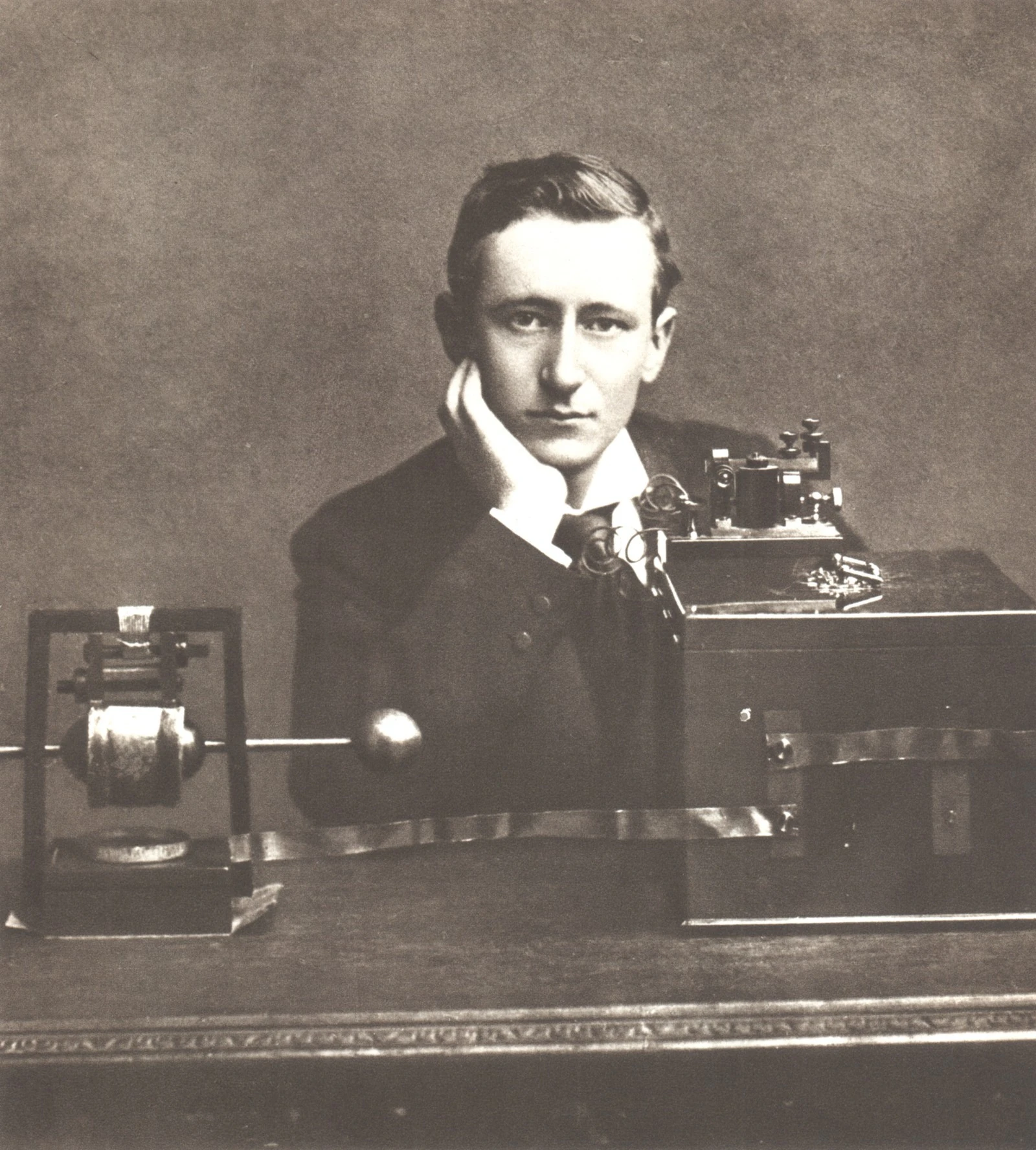
The first patent
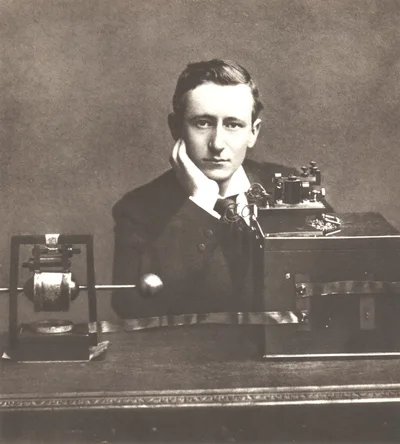
21-year-old Guglielmo Marconi files for the world’s first patent for communication by radio waves[2].
Photo: Smithsonian Institution / Wikimedia Commons, no known restrictions
1901Atlantic
Three dots across the ocean
On 12 December Marconi, on Newfoundland with an aerial flown from a kite, hears the Morse letter S, three dots, sent from Cornwall 3,500 kilometres away[2].
Sound reconstruction: Bucha FM
1924Kharkiv
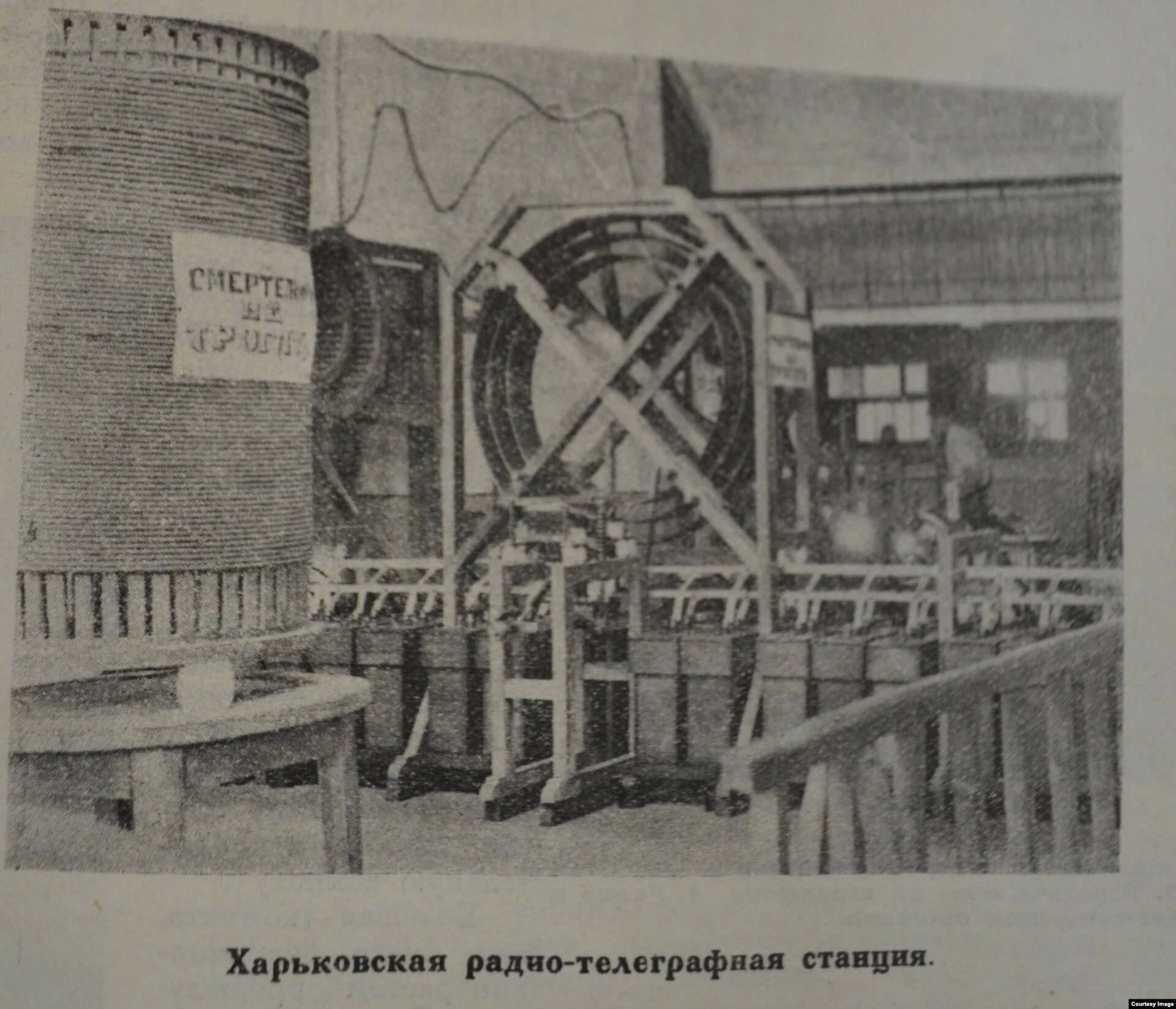
"Kharkiv speaking!"
On 16 November at 7 pm Ukrainian Radio goes on air for the first time: 22 minutes of music from a studio lined with horse blankets[3].
Photo: Radio Svoboda, from the archives of the Korolenko Library and Karazin University Library
1925Polumia
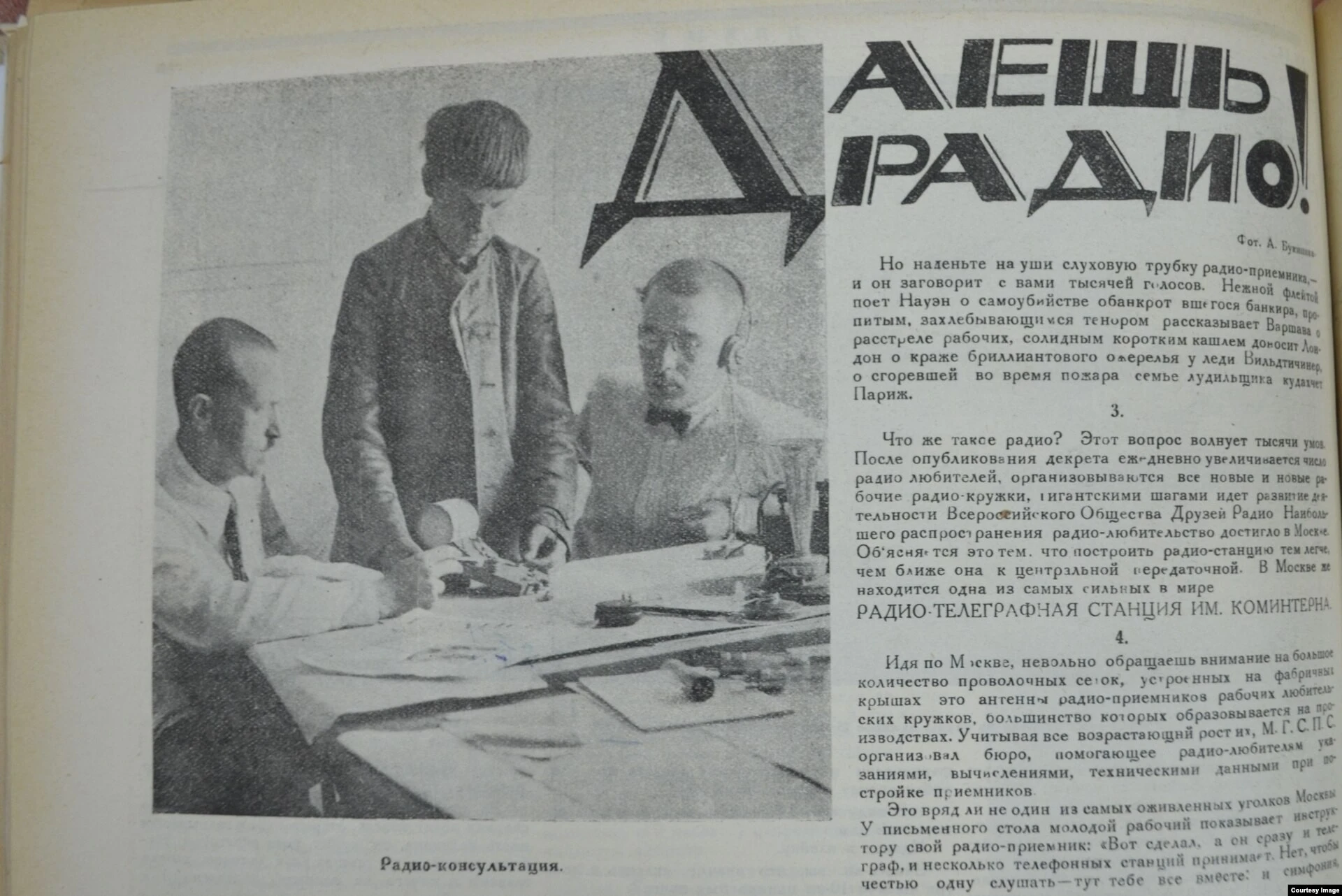
"Give us radio!"
From January the radio magazine Polumia goes on air three times a week, and the Kharkiv press urges people to buy receivers[3].
Photo: Radio Svoboda, from the archives of the Korolenko Library and Karazin University Library
1954Munich
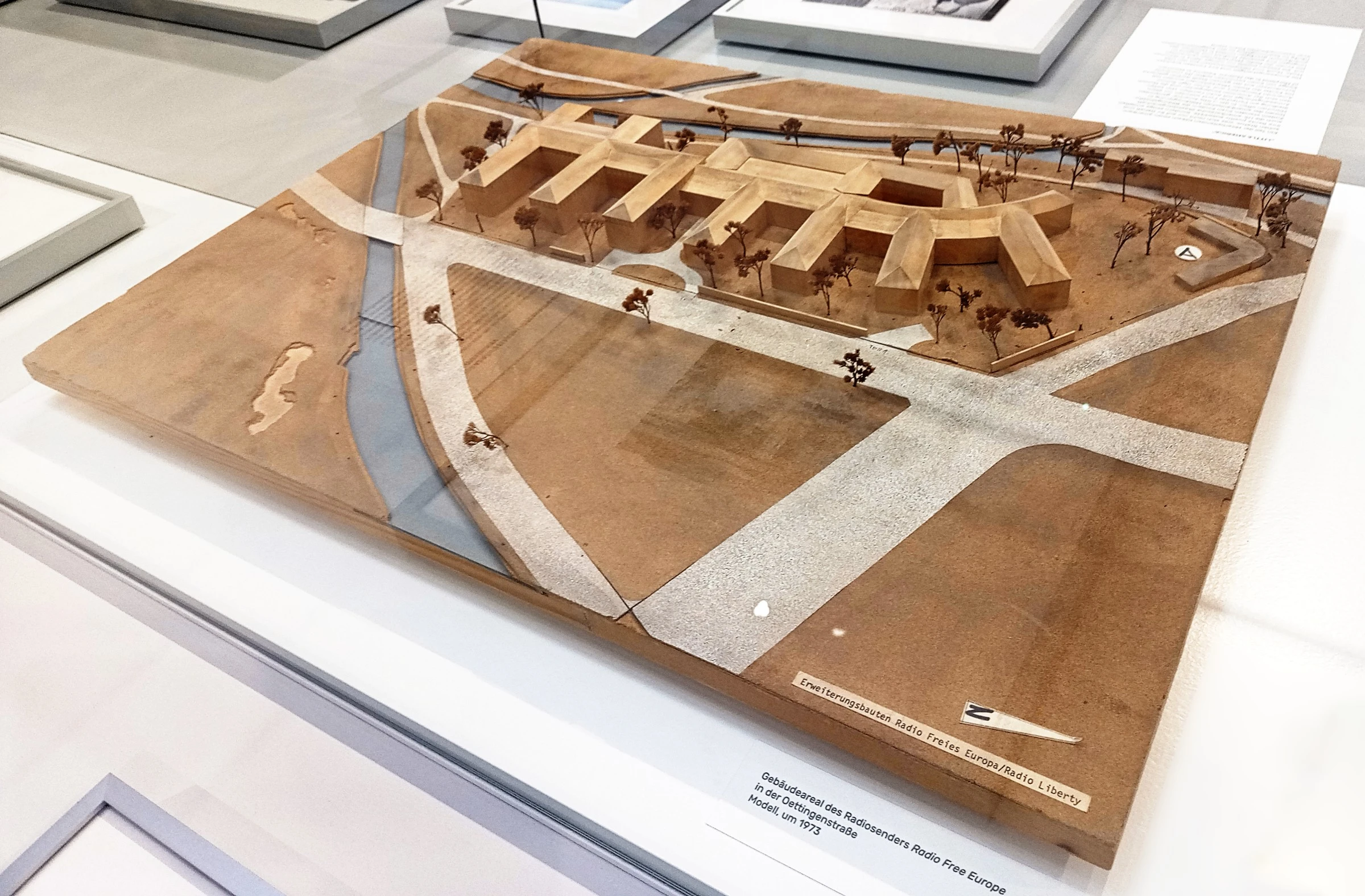
"Brothers and sisters!"
On 16 August Radio Liberty’s Ukrainian service first broadcasts from Munich. The USSR will jam it until 1988[4].
Photo: Renardo la vulpo / Wikimedia Commons, CC BY-SA 4.0
1971Riga
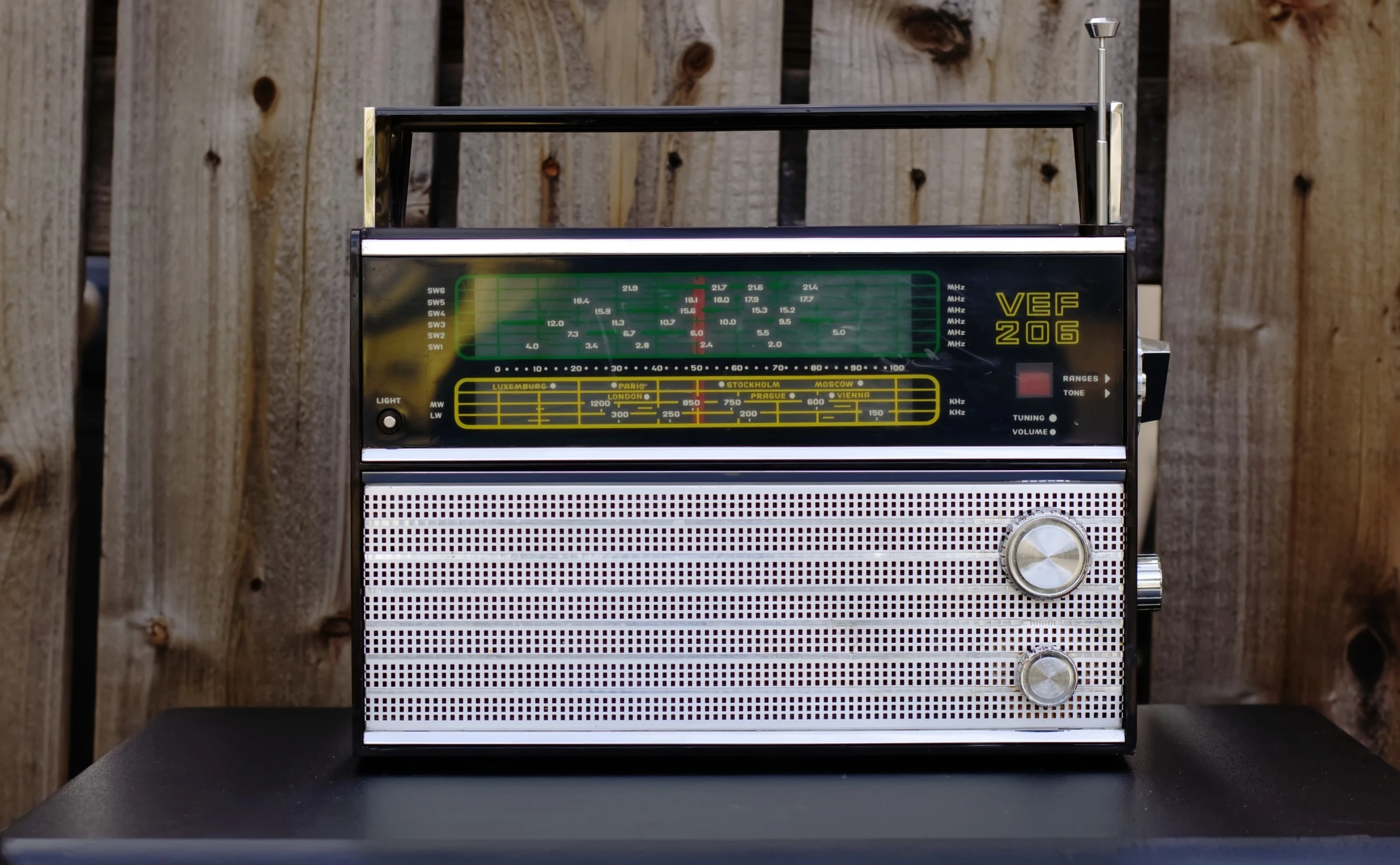
A radio for every bag
The VEF factory in Riga starts making the VEF 206 portable radio, which stays in production until 1986.
Photo: Sabalo22 / Wikimedia Commons, CC0
2000Dictation
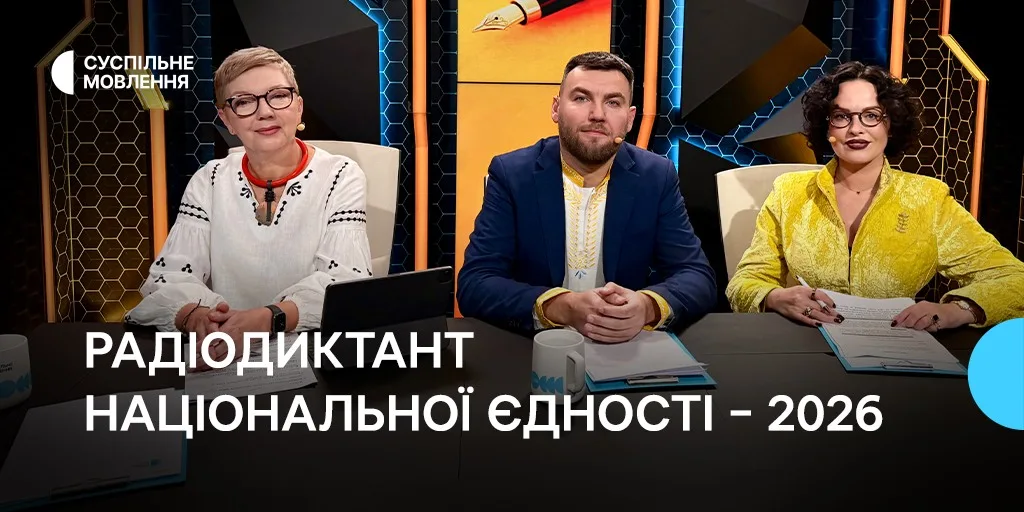
The radio dictation
Ukrainian Radio holds the first Radio Dictation of National Unity, now written every year in Ukraine and abroad[5].
Photo: Suspilne
2019Liar
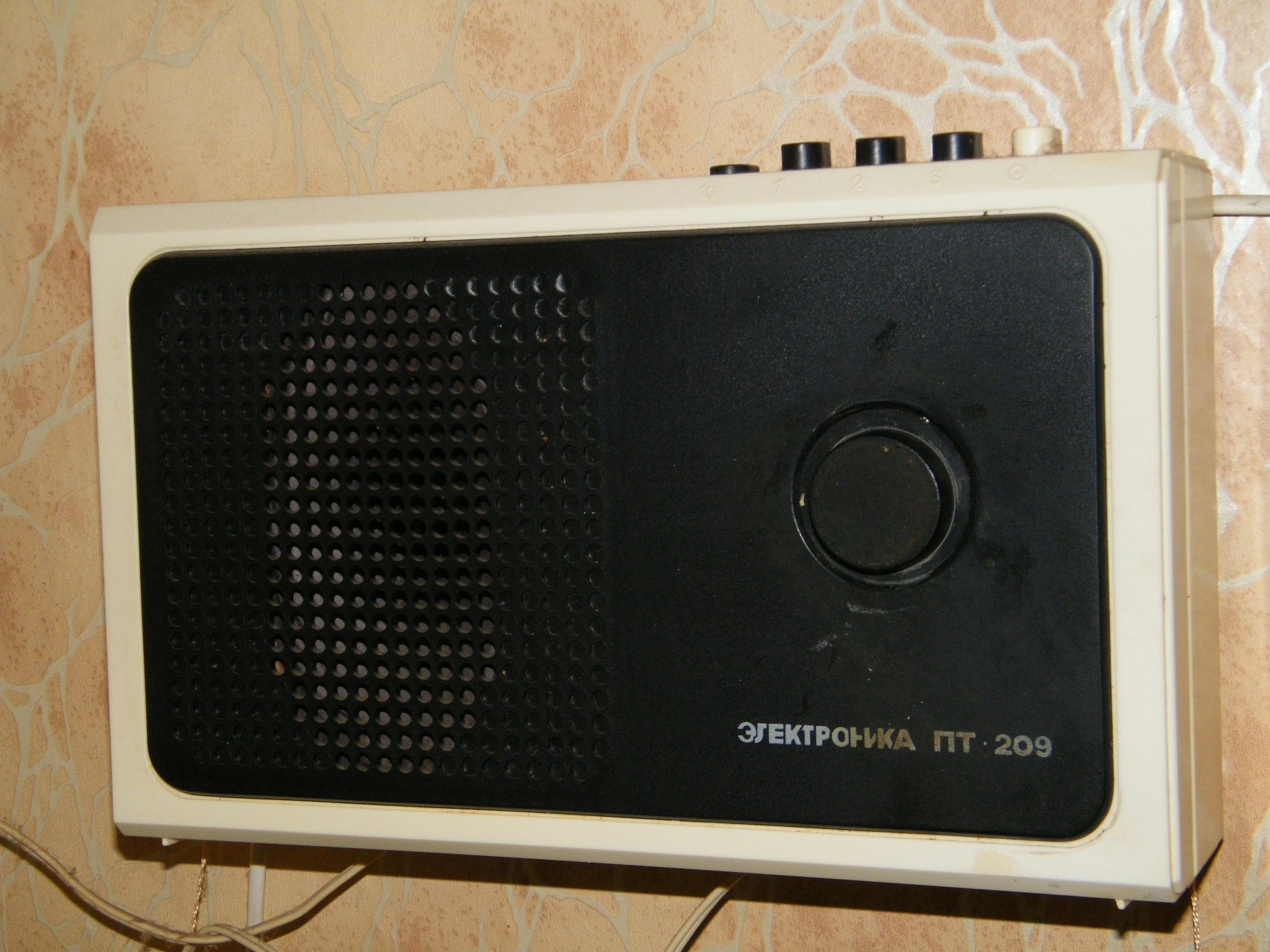
Farewell, little liar
Wired radio is switched off in Odesa and Dnipro, where fewer than half a percent of residents of these cities of a million still used it[6].
Photo: Andshel / Wikimedia Commons, CC BY-SA 3.0
2024Kyiv
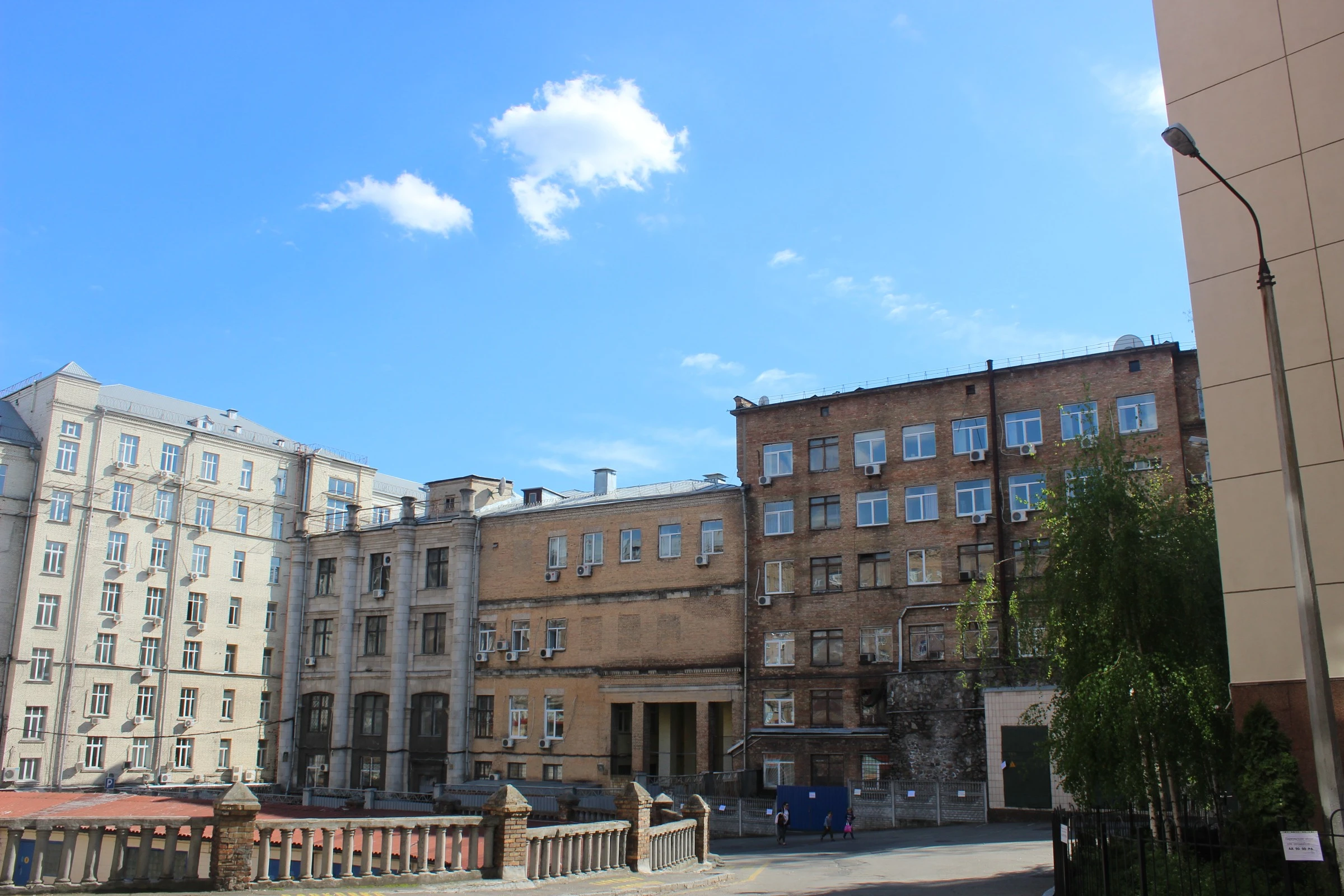
The centenary
Ukrainian Radio turns 100. According to Dmytro Khorkin, Kyiv residents voted to name the square by Prorizna Street "Ukrainian Radio Square"[7].
Photo: Sarapulov / Wikimedia Commons, CC BY-SA 4.0
"Hello, this is Kharkiv speaking!"
Kharkiv in the 1920s was the capital of Soviet Ukraine. The authorities wanted their own radio on air by the seventh anniversary of the October coup, 7 November, but the engineers could not get rid of the echo. Whenever the announcer spoke into the microphone, the headphones roared like a blacksmith’s bellows.
They lined the studio walls with firewood from Taranivka and set out jugs and pots from Valky around the room, all in vain. The rescue came from a military commander, Oleksandr Yehorov, who asked his scouts how they kept quiet on night patrols on horseback. "We wrap the hooves in horse blankets," they said. On 15 November two cartloads of horse blankets arrived, the studio was lined with them and the sound came through clean[3].
Photo: Radio Svoboda, from the archives of the Korolenko Library and Karazin University Library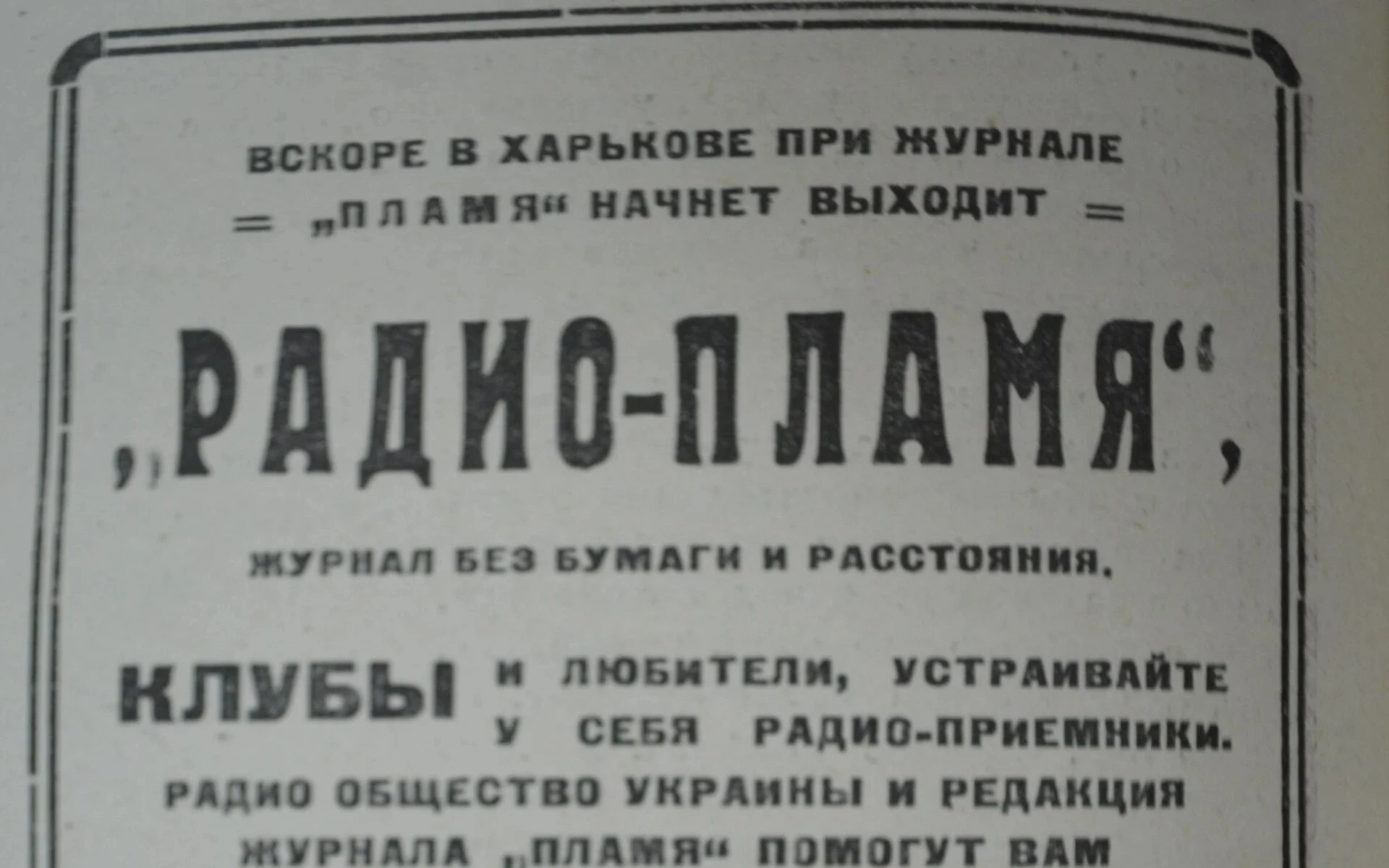 Photo: Radio Svoboda, from the archives of the Korolenko Library and Karazin University Library
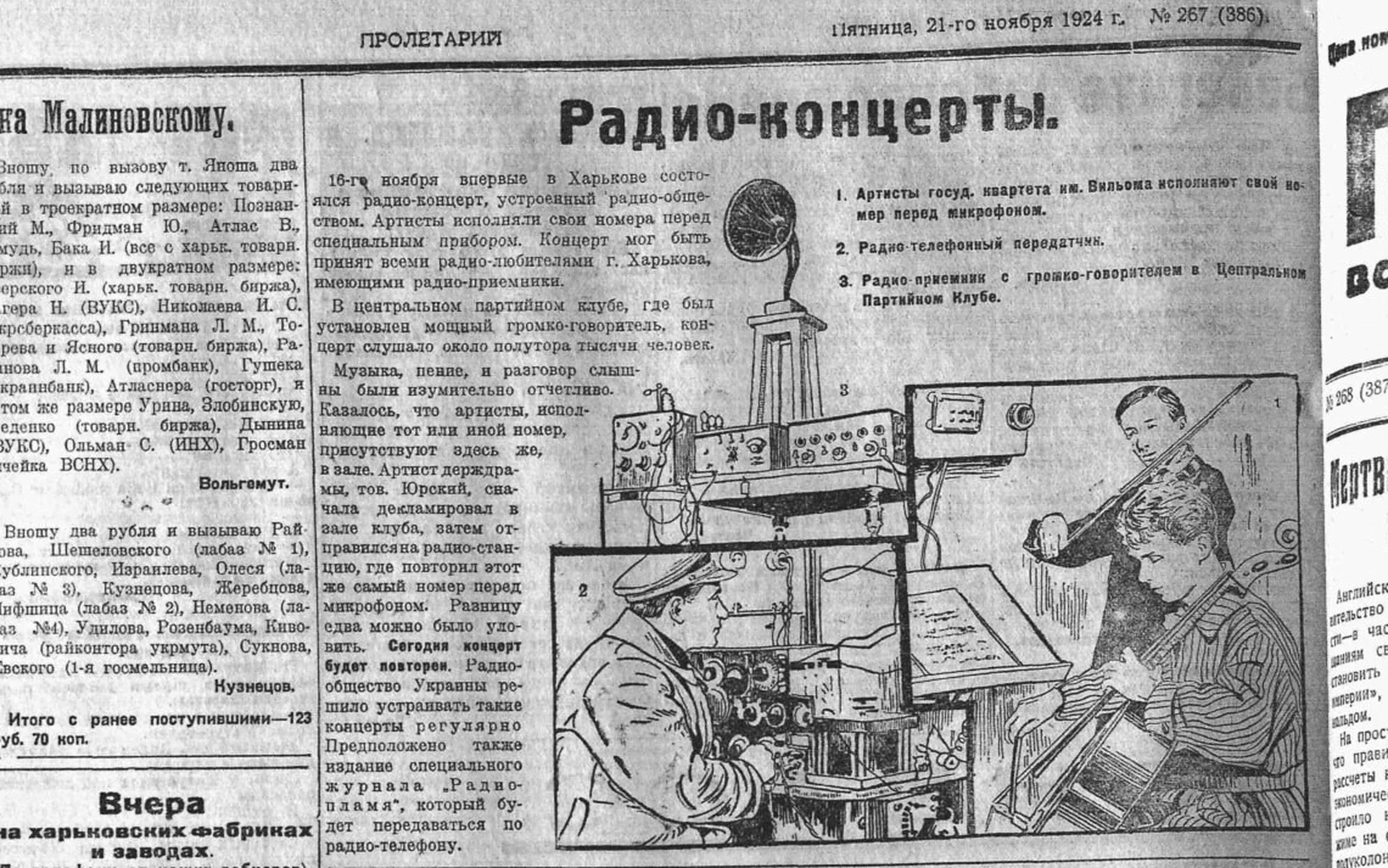 Photo: Radio Svoboda, from the archives of the Korolenko Library and Karazin University Library
On 16 November at 7 pm a signals technician (the job of announcer did not exist yet) said into the microphone: "Hello, hello, hello! This is Kharkiv speaking! To you, to you, to you! The first radiotelephone station in Ukraine is on air." For the next 22 minutes the Vieuxtemps Quartet played, becoming Ukraine’s first radio artists[3]. About 70 radio amateurs in the city picked up the broadcast[1], while almost one and a half thousand people gathered round the loudspeaker at the central party club[3].
It was not without its comic moment. An opera singer asked for a listener to be seated in front of her so she could see how her singing went down. They brought in a caretaker, but he could not take his eyes off the wall behind her, where a poster with a skull, crossbones and the word "It kills" hung by the transmitter. The singer tried her hardest to cheer him up, then at the end turned round, saw the poster and fainted[3].
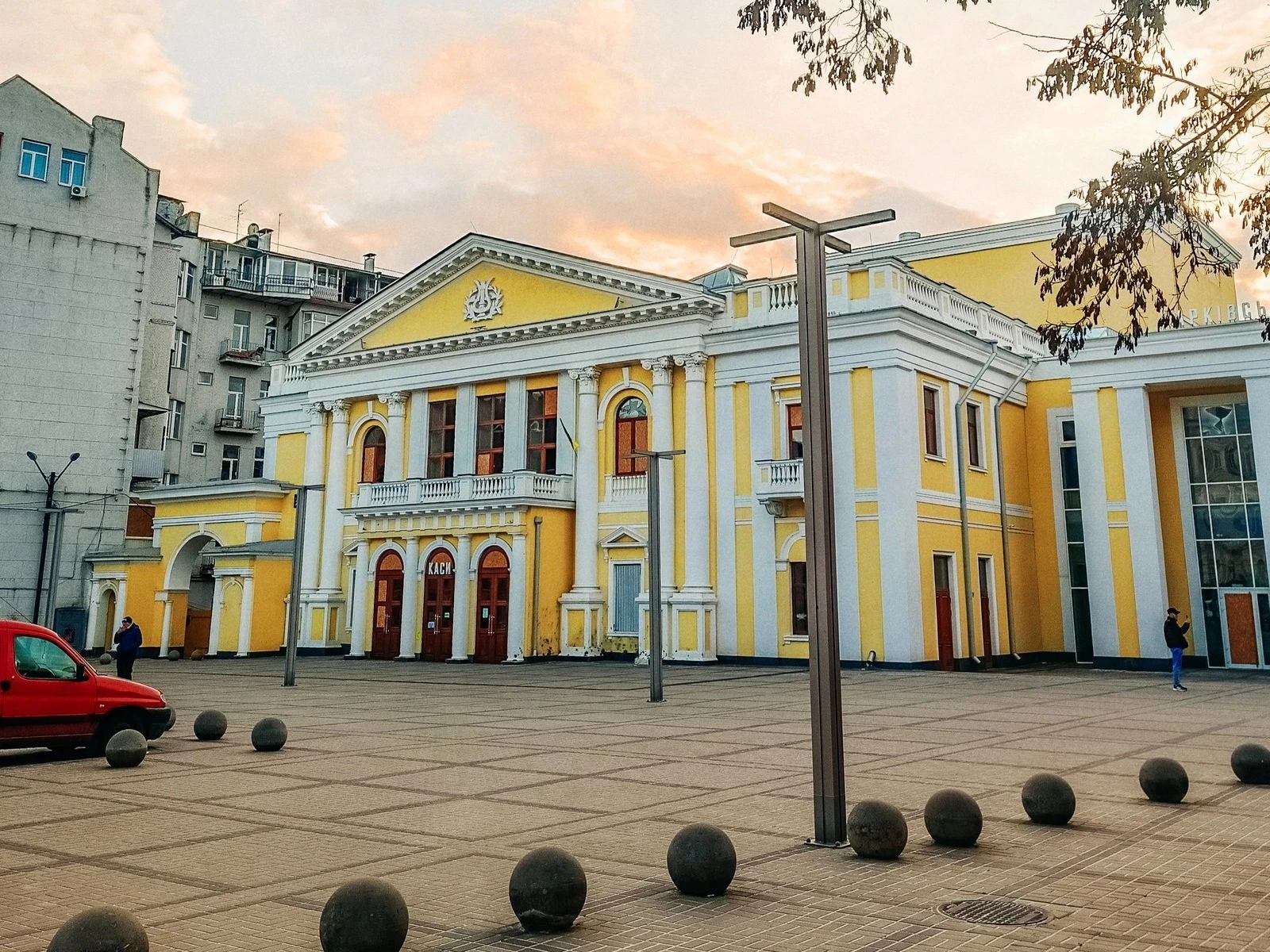 Photo: Andreeva Aliona01 / Wikimedia Commons, CC BY-SA 4.0
Kharkiv began broadcasting regularly in January 1925. One more curious fact: according to Dmytro Khorkin, a board member of Suspilne, Ukrainian Radio was at first founded, like the BBC, by a joint-stock company, the Trust of Low-Current Device Manufacturers, and was nationalised by the Soviet authorities only in 1928[7].
Berlin in a Kharkiv garden
Kharkiv heard radio even before it had its own broadcasts. On 11 September 1921, in the Hryadushchee garden, today’s Shevchenko Park, symphony music suddenly poured from horn loudspeakers: a concert relayed from Berlin. The sound was muffled and crackly, yet queues of people wanting to listen stretched for several hundred metres[3].
In November 1924 a receiver cost 150 roubles, a fortune for a worker. The newspaper Proletar advised clubbing together: "As a radio receiver is expensive, we advise you to set up a radio circle and order a receiver with the money collected." So people mostly listened together, in clubs, workshops and squares, where "radio newspapers" boomed from loudspeakers every evening from 7 to 9 pm. Home "plate" speakers began to be installed in Kharkiv flats only from 1927[3].
Radio as the newspapers showed it
Photo: Radio Svoboda, from the archives of the Korolenko Library and Karazin University Library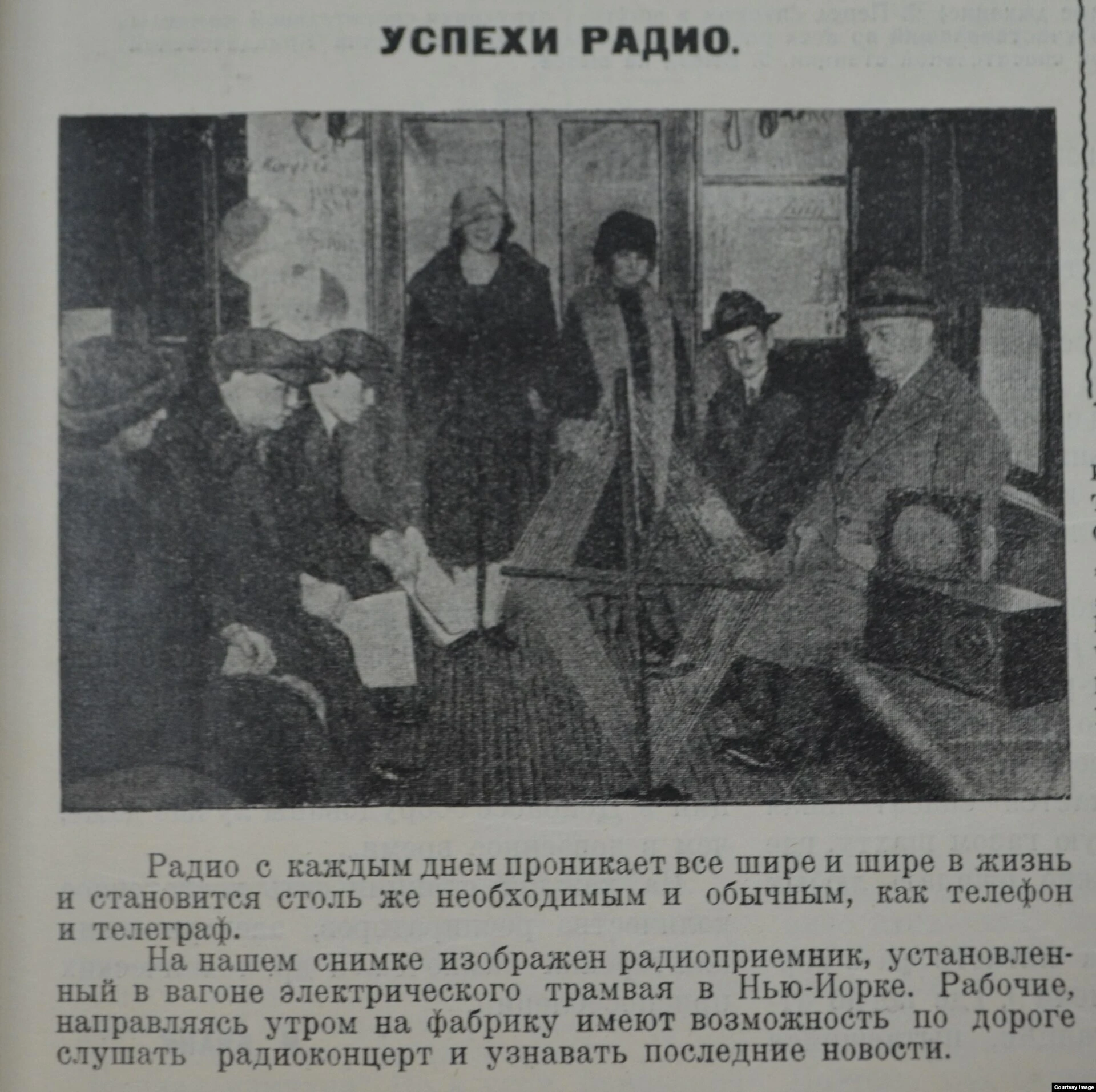 Photo: Radio Svoboda, from the archives of the Korolenko Library and Karazin University Library
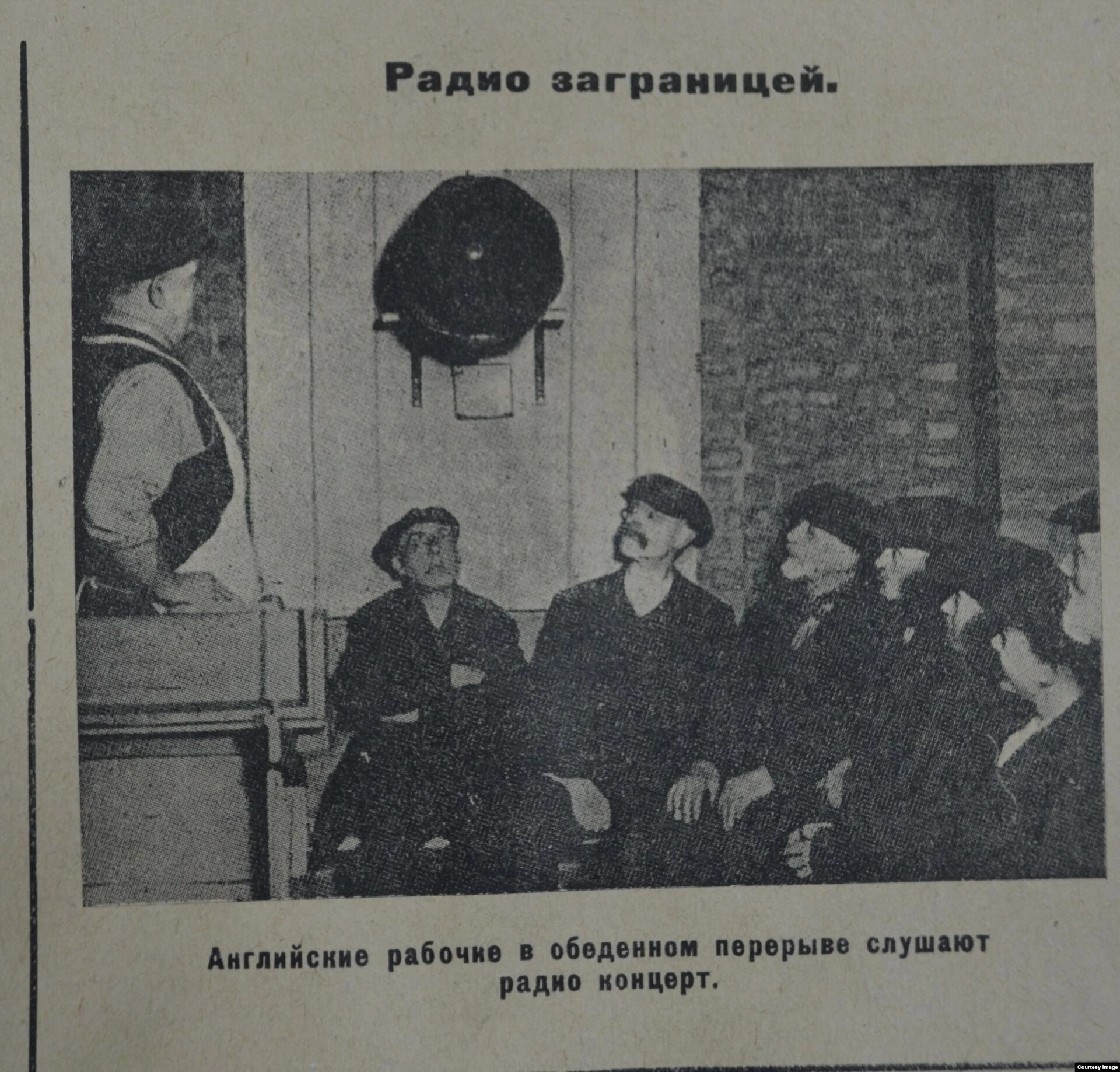 Photo: Radio Svoboda, from the archives of the Korolenko Library and Karazin University Library
Why not 7 May
The older generation remembers a different "Radio Day", 7 May. The USSR introduced it in 1945 for the 50th anniversary of the demonstration of Alexander Popov’s device, and Soviet tradition credited Popov with "inventing" radio[8]. In fact his 1895 device was a lightning detector: it picked up lightning discharges and recorded them on a paper strip. Popov never obtained a patent[9].
The world’s first patent for a communication system based on radio waves went to a 21-year-old Italian, Guglielmo Marconi, who filed for British patent No. 12039 on 2 June 1896. In 1909 Marconi shared the Nobel Prize in Physics with Ferdinand Braun[2]. And on 12 December 1901, on Newfoundland, Marconi heard the Morse letter S sent across the Atlantic from Cornwall[2].
Marconi versus Popov
Photo: Smithsonian Institution / Wikimedia Commons, no known restrictions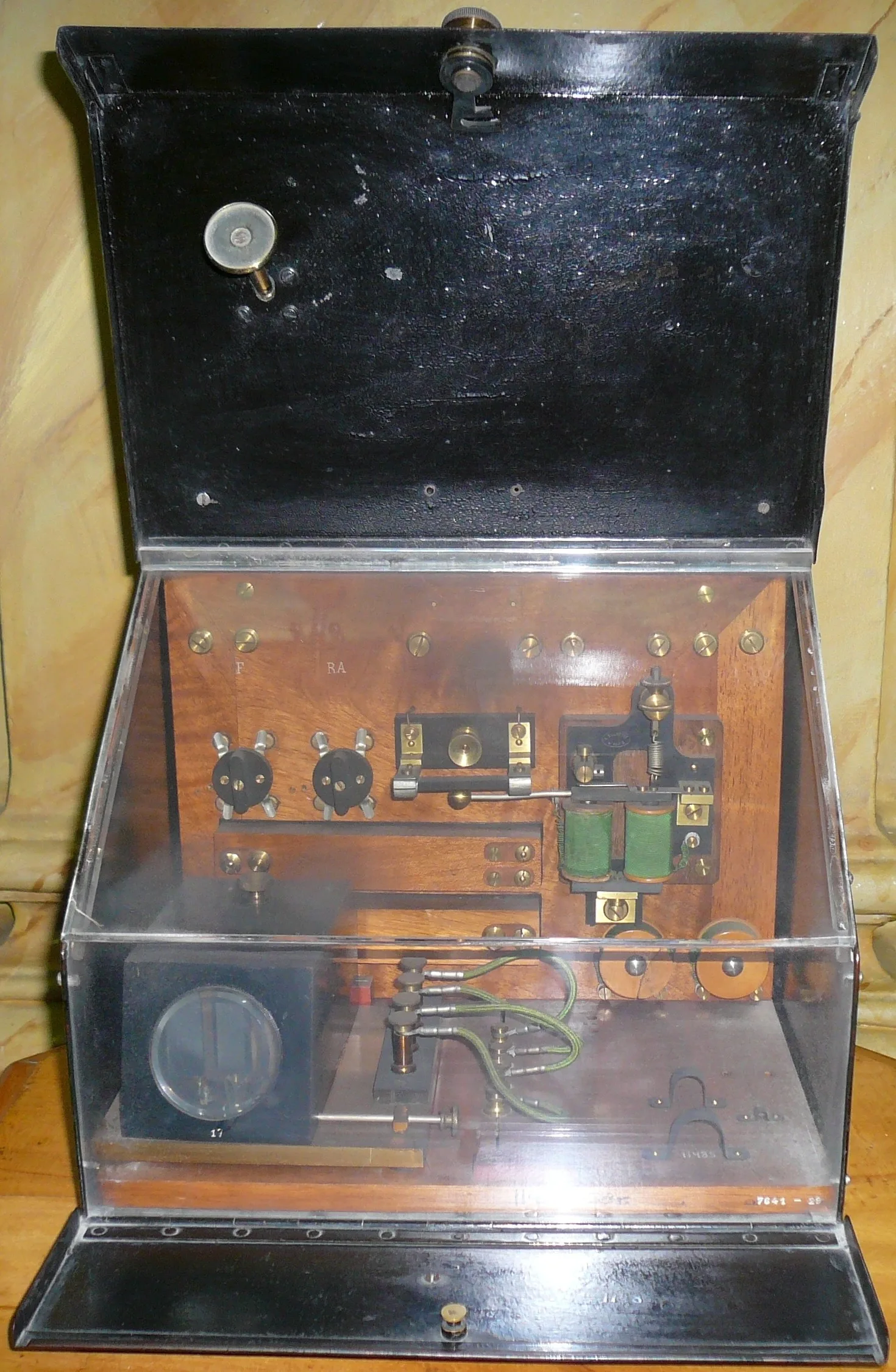 Photo: Stanislav Kozlovskiy / Wikimedia Commons, CC BY-SA 3.0
The Ukrainian date was dug out of old newspaper files by a radio communications veteran, Vitalii Artemenko: half a century later he found reports of the 1924 Kharkiv broadcast and spent twenty years campaigning for its recognition. In 1994 he wrote to President Leonid Kuchma, the national broadcaster backed the idea[8], and on 11 November 1994 decree No. 667/94 established the Day of Radio, Television and Communications Workers[10].
A "liar" in every kitchen
For several generations radio meant not a receiver but a plastic box on the wall: the wired radio point. It needed neither batteries nor a socket, so in many villages it was almost the only source of news. Nobody really trusted it, though, and people nicknamed it brekhunets, "the little liar", from the word for lie, but fondly[11]. "Switch on the little liar in the kitchen and something will stun you," Lina Kostenko writes in Notes of a Ukrainian Madman.
The radios everyone remembers
Photo: Andshel / Wikimedia Commons, CC BY-SA 3.0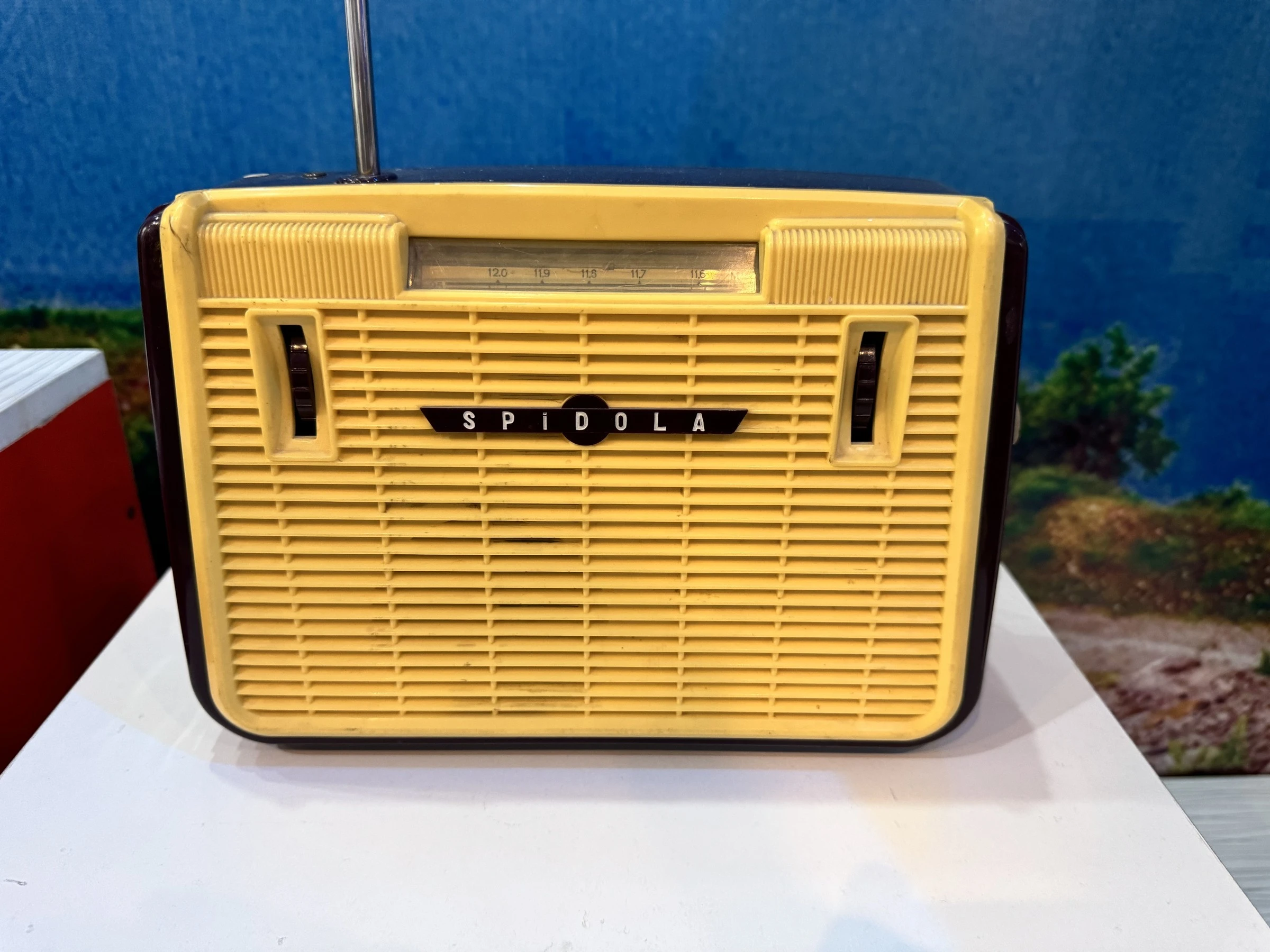 Photo: Jamshid Nurkulov / Wikimedia Commons, CC BY 4.0Photo: Sabalo22 / Wikimedia Commons, CC0
In 2019 Ukrtelecom still served about 400,000 home radio points, and 130,000 to 150,000 subscribers were giving them up every year. Wired radio was switched off in Odesa on 1 January 2019 and in Dnipro on 1 April[6], and later across whole regions: Odesa, Mykolaiv, Kherson, Zakarpattia and Dnipropetrovsk[11].
Voices through the jamming
While the "liar" read out the official news, some Ukrainians tuned their short-wave sets to the "enemy voices". On 16 August 1954 the Ukrainian service of the station later known as Radio Liberty went on air from Munich for the first time. Its first broadcast began: "Brothers and sisters! Ukrainians! We live abroad, but our hearts and thoughts are always with you." Programmes were recorded on tape in Munich and the reels were driven to the transmitter at Lampertheim[4].
From 1955 the USSR built a network of jamming transmitters around its big cities. Jamming of Voice of America, the BBC and Deutsche Welle was gradually dropped, but Radio Liberty was jammed the longest, right up to 1988[4].
Who broadcast and who jammed
Photo: Renardo la vulpo / Wikimedia Commons, CC BY-SA 4.0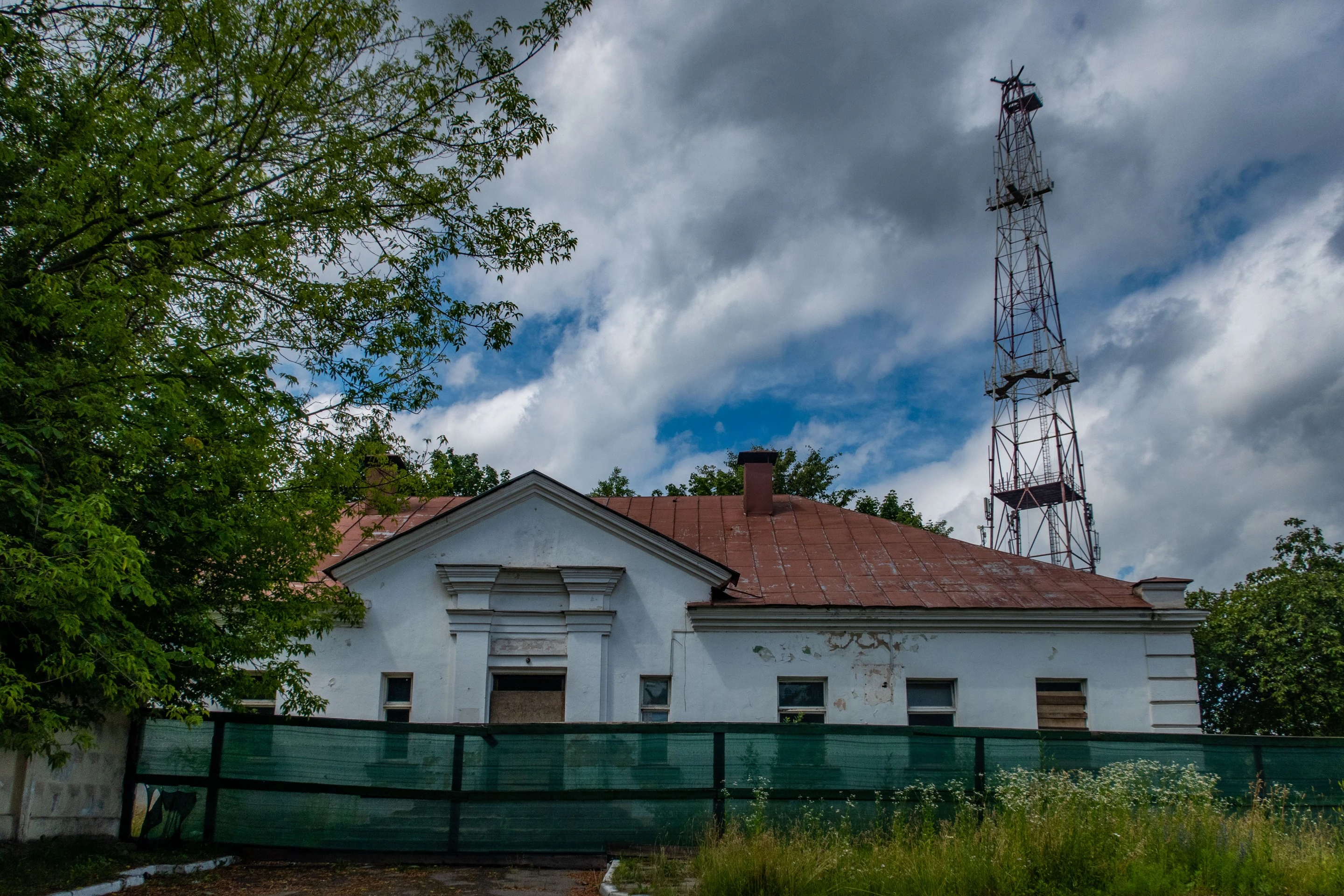 Photo: Homoatrox / Wikimedia Commons, CC BY-SA 3.0
The jamming that saved lives
- The strangest jammer in history was a polka. In 1941 Finnish sappers discovered that the mines left in Viipuri had radio detonators. To stop them being set off by signal, Finnish radio played Säkkijärven polkka non-stop from 4 September 1941 to 2 February 1942: half a year of one tune[12].
Listen to the very recording: accordionist Viljo Vesterinen with the Dallapé Orchestra, 1939.
The radio that leaves no trace
Ukrainian Radio, stresses Dmytro Khorkin, a board member of Suspilne, has not fallen silent once in a hundred years, not even in the Second World War, when the whole of present-day Ukraine was occupied[7]. Back then the Ukrainian radio committee broadcast from Saratov: from 23 November 1941 to 10 March 1944 the Taras Shevchenko radio station worked on the 49.5-metre band, and Pavlo Tychyna and Maksym Rylskyi spoke into its microphone[13].
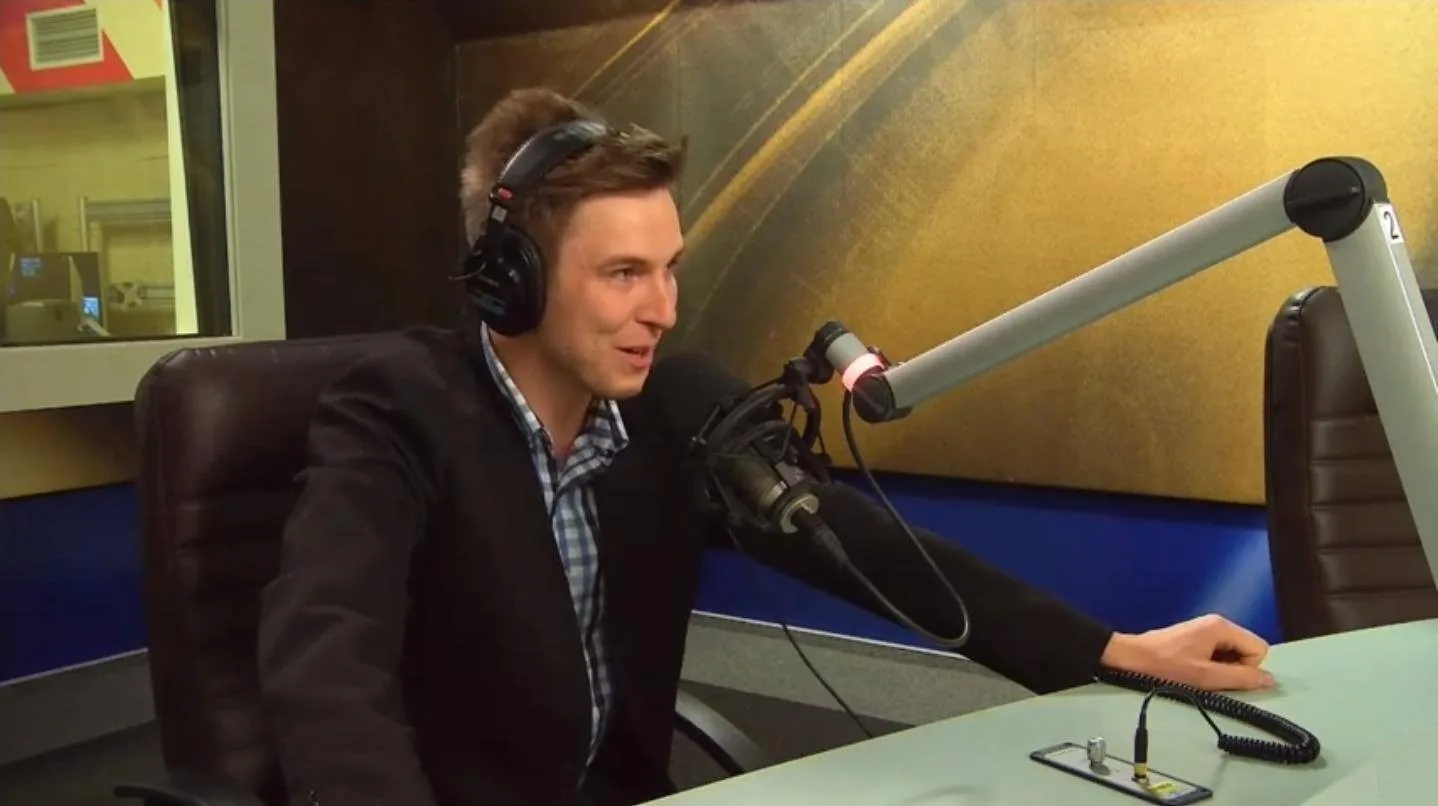 Photo: Perohanych / Wikimedia Commons, CC BY-SA 4.0
The full-scale war of 2022 gave radio its leading role back. The russians started with the towers: on 1 March 2022 missiles struck the Kyiv TV tower, and on 22 April 2024 a missile brought down the upper part of the Kharkiv one. Altogether, according to the Institute of Mass Information, they deliberately blew up 14 television and radio towers[7].
Strikes on the towers
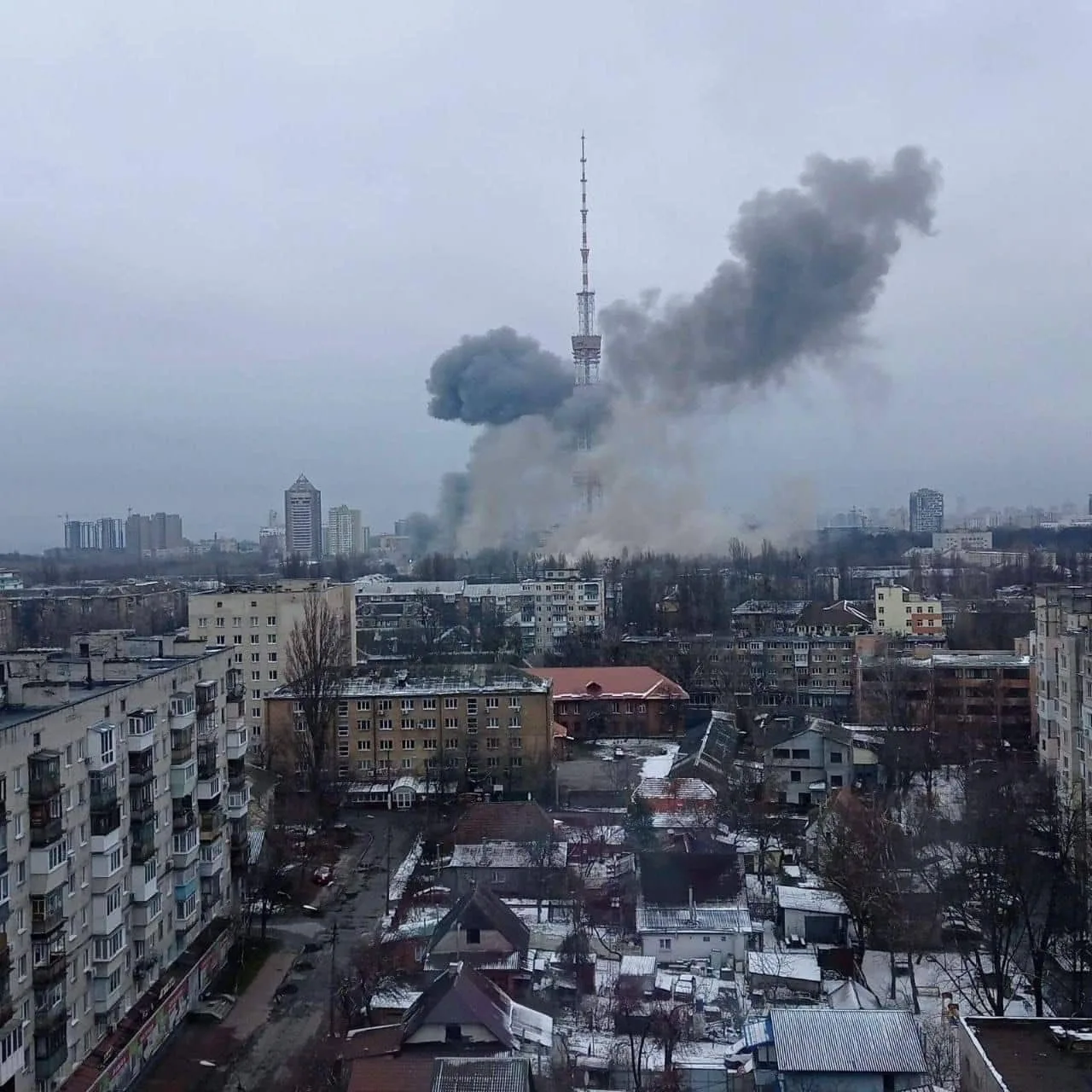 Photo: Ministry of Internal Affairs of Ukraine / Wikimedia Commons, CC BY 4.0
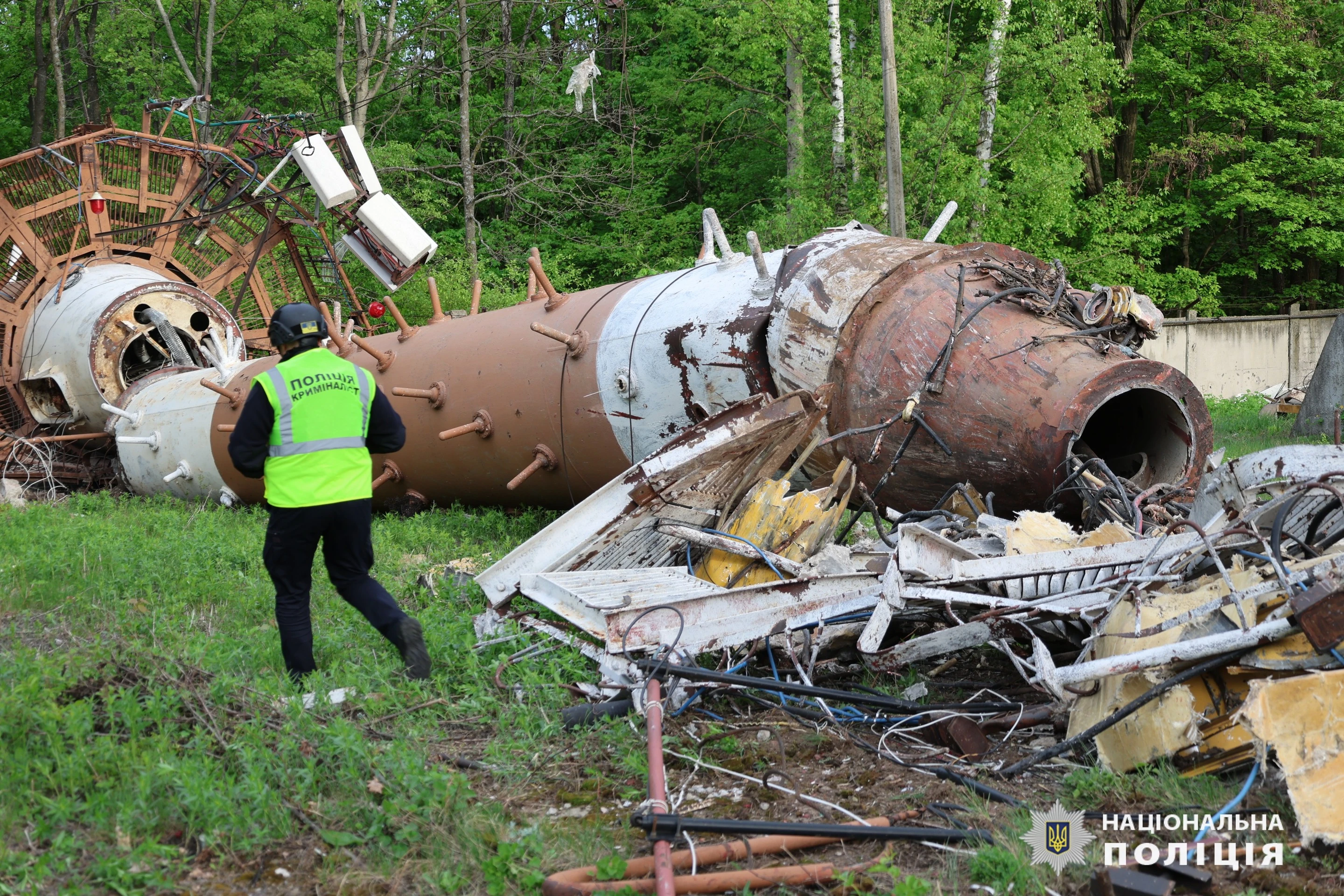 Photo: National Police of Ukraine / Wikimedia Commons, CC BY 4.0
But radio did not fall silent. In the border villages of Kharkiv region the power went off in the first hours of 24 February, taking internet and television with it. People listened to the news on car radios and phones several times a day, at 9 am, noon and 6 pm, recalls a witness who lived through the occupation: it was from the radio that they learned Kyiv and Kharkiv were holding[1]. The mayor of Mariupol addressed residents through Ukrainian Radio, and broadcasts guided people into evacuation corridors from Lyman, Izium and Kherson[7].
Ukrainian Radio’s Kherson journalist Marharyta Laznyk stayed under occupation and went on air whenever she could get a connection, roughly every other day. She began each report with the words: "Greetings, Ukrainian Radio, from Ukrainian Kherson." Her name was first spoken on air only on 11 November 2022, the day the city was liberated[14].
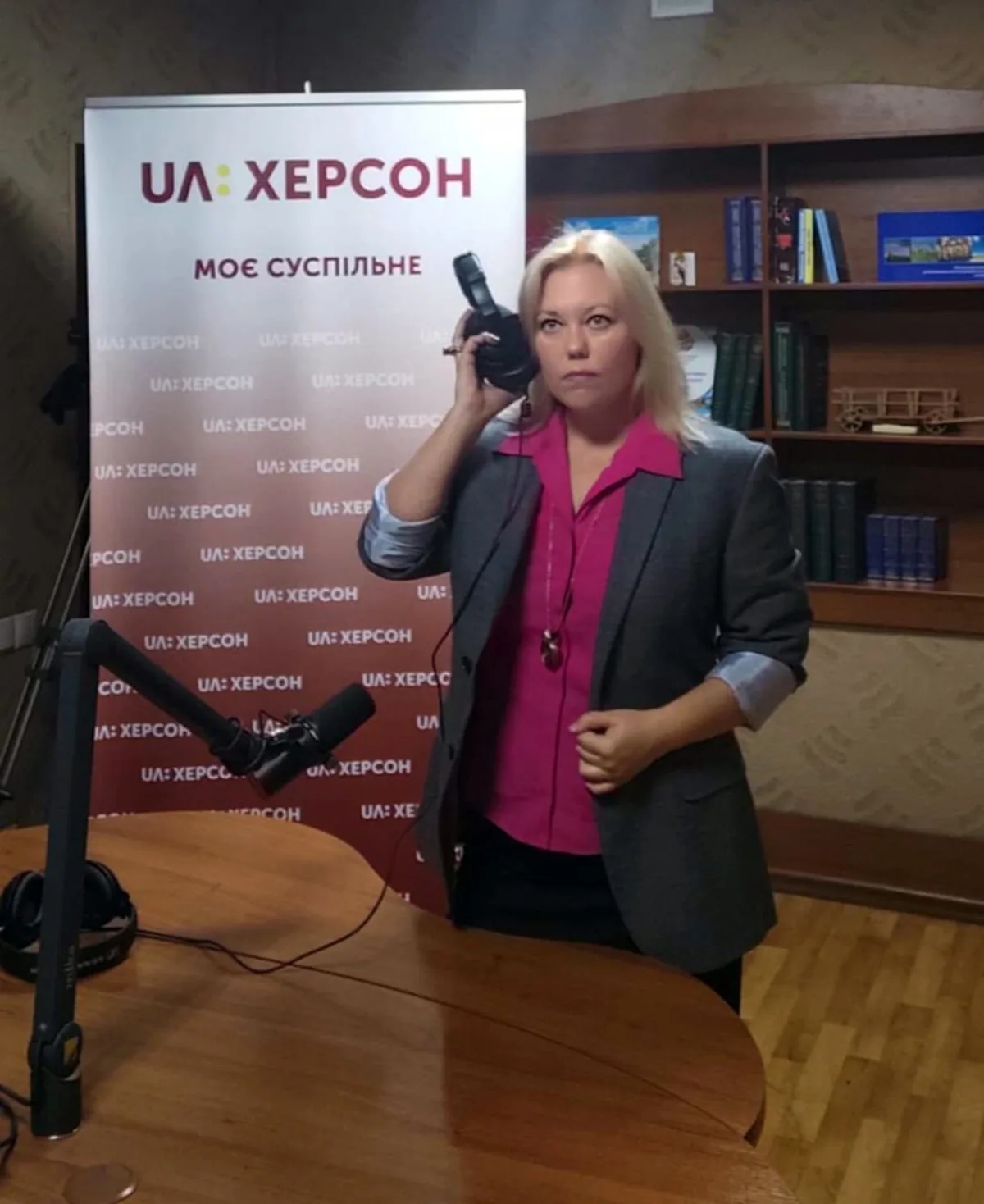 Photo: Marharyta Laznyk’s personal archive
"It leaves no trace," Khorkin says, explaining why radio is strategic for the occupied territories. "You visit a website and it can all be seen. With radio you listen, switch over, and nobody knows which band you were on."[7]
And Bucha
In March 2022 Bucha was left without even that. During the occupation, from 3 to 31 March, the town had no communications. "We let people know by word of mouth," the mayor, Anatolii Fedoruk, recalled. Only on 7 March did the council manage to "catch a signal" and learn about evacuation buses[15].
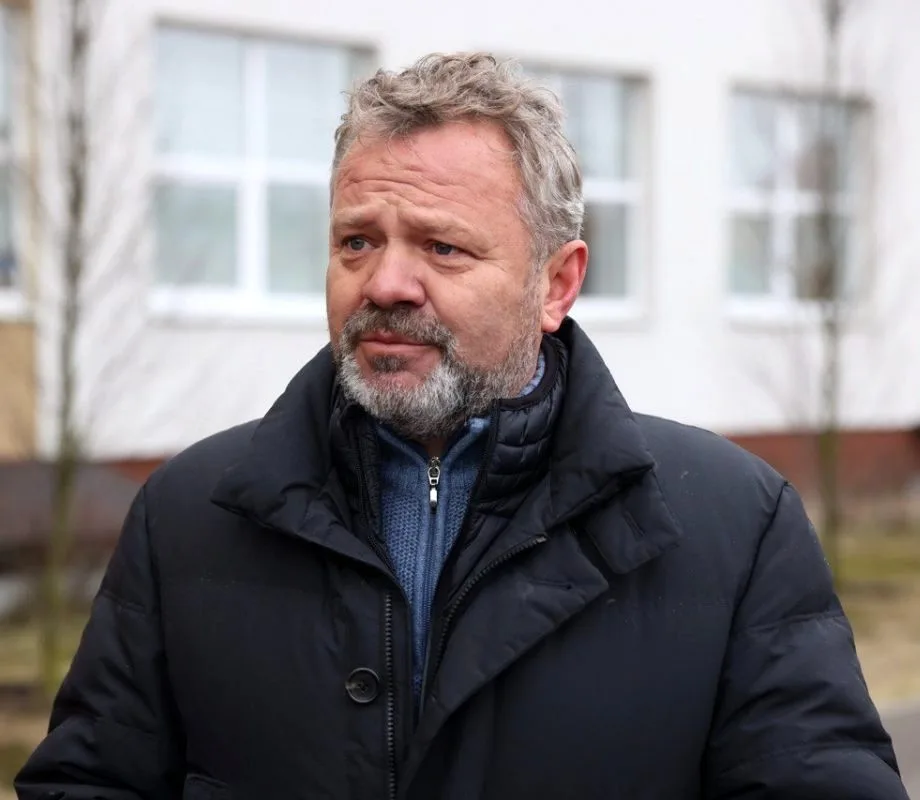 Photo: ArmyInform / Wikimedia Commons, CC BY 4.0
And this year, 2026, Bucha got a radio station of its own: Bucha FM.
The dictation the whole country writes
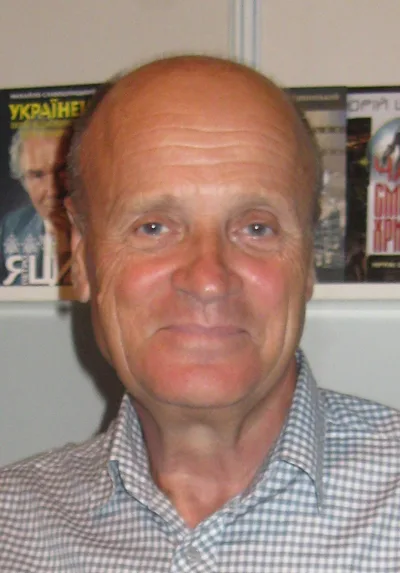
Ukraine’s biggest annual radio event is the Radio Dictation of National Unity. It was first held in 2000 on the initiative of the writer Mykhailo Slaboshpytskyi and has always been organised by Ukrainian Radio. The 100 to 120 words are written so that only a handful of people get through without a mistake: in 2018, 32,799 people took part and 311 handed in flawless work[5].
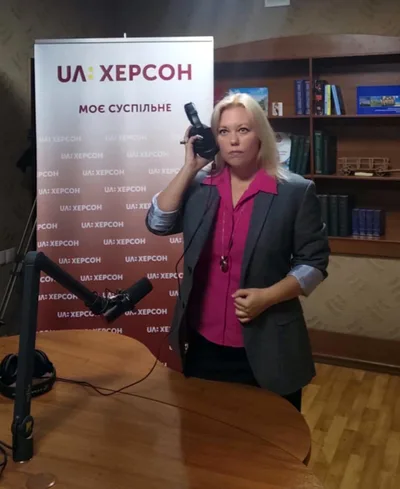
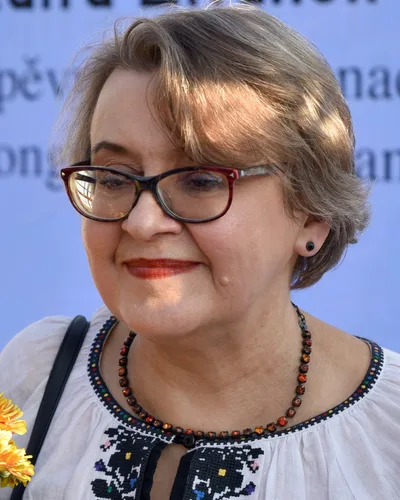
For Ukrainian Radio’s centenary the 2024 dictation was called The Magic of the Voice, with a text by Oksana Zabuzhko[5]. This year, on 27 October, Ukraine wrote "A Letter That Never Ends" by the veteran and writer Artur Dron. For the first time in its history the dictation was read by two people: Ukrainian teacher Artur Proidakov and volunteer Dasha Astafieva. People wrote it in the shelters of Kyiv bookshops, on a border guard patrol boat in Izmail, on Intercity trains and even in Antarctica[16].
Photo: SuspilneThe faces of the dictation
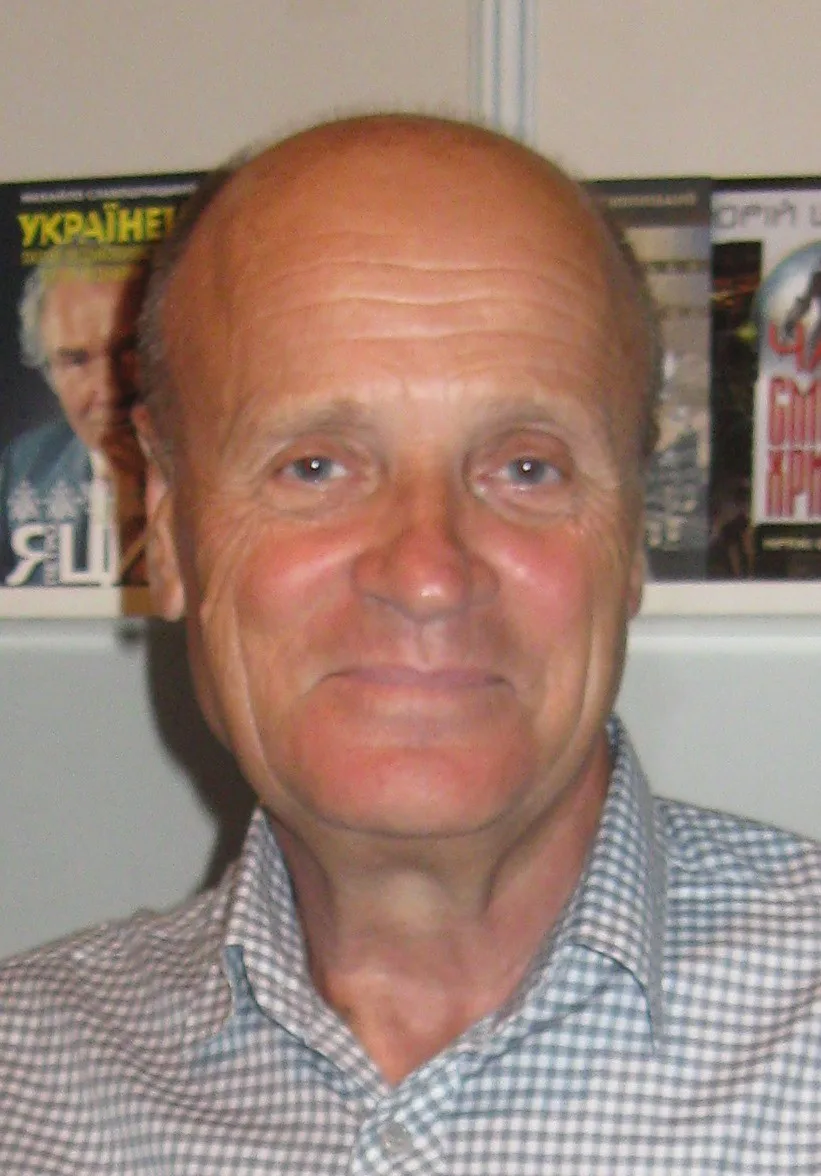 Photo: Perohanych / Wikimedia Commons, CC BY-SA 4.0
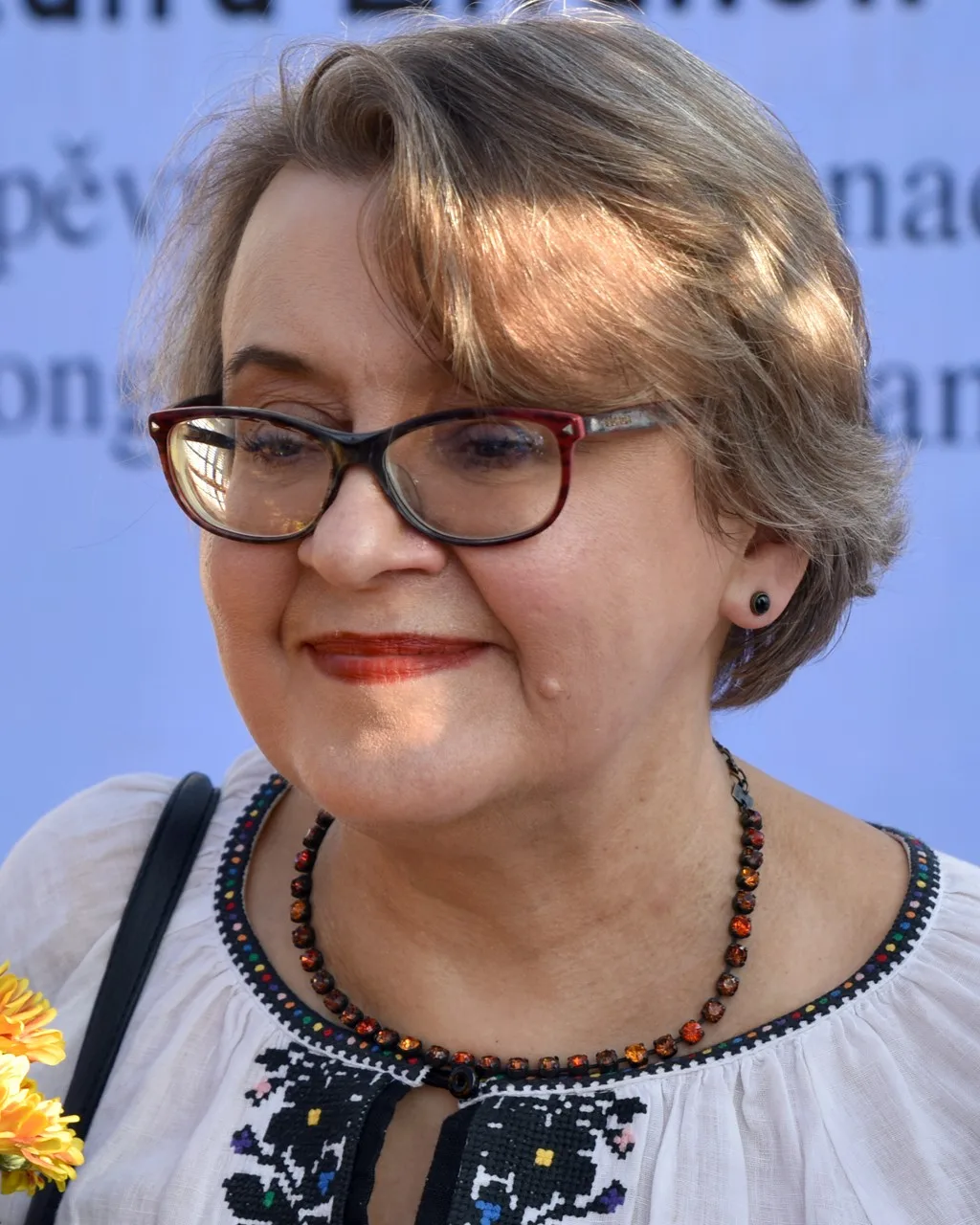 Photo: Jindřich Nosek (NoJin) / Wikimedia Commons, CC BY 4.0
Radio: from lightning detector to national dictation
Popov’s device
Alexander Popov shows a lightning detector that picks up discharges.
Marconi’s patent
The world’s first patent for communication by radio waves.
Berlin in Kharkiv
A concert from Berlin pours from horn speakers in a Kharkiv garden.
"Kharkiv speaking!"
16 November: Ukrainian Radio’s first broadcast, 22 minutes long.
Regular broadcasting
From January Kharkiv broadcasts to a schedule.
Radio at home
Kharkiv homes begin to get "plate" speakers.
Broadcasting from evacuation
The Taras Shevchenko radio station broadcasts from Saratov.
"Brothers and sisters!"
Radio Liberty’s Ukrainian service goes on air.
The end of jamming
The USSR stops jamming Radio Liberty, the last station to be jammed.
A new holiday
A presidential decree makes 16 November the Day of Radio, Television and Communications Workers.
The first radio dictation
Ukrainian Radio holds the first Radio Dictation of National Unity.
Farewell, little liar
Wired radio is switched off in Odesa and Dnipro.
The voice of occupied cities
Radio becomes the only news source for people under occupation.
The centenary
Ukrainian Radio turns 100; the dictation is called The Magic of the Voice.
Bucha FM
Bucha gets a radio station of its own.
Radio in numbers
- ~70 radio amateurs heard the first broadcast in 1924
- ~1,500 people listened at the loudspeaker in the party club
- 400,000 wired radio points were left in Ukraine in 2019
- 14 TV and radio towers deliberately blown up by the russians
The people behind the broadcasts
- Guglielmo Marconi Italian engineer, holder of the first patent for radio communication, Nobel laureate in 1909.
- Mykhailo Slaboshpytskyi Writer who came up with the Radio Dictation of National Unity.
- Dmytro Khorkin Suspilne board member in charge of radio. He joined Ukrainian Radio at 18 in 2004.
- Marharyta Laznyk Kherson journalist who broadcast from the occupied city: "Greetings, Ukrainian Radio, from Ukrainian Kherson."
- Oksana Zabuzhko Writer and author of The Magic of the Voice, the dictation for Ukrainian Radio’s centenary.

Test yourself
What finally got rid of the echo in the first Kharkiv studio?
How long was Ukrainian Radio’s first broadcast?
Who received the first patent for communication by radio waves?
What did people nickname the wired radio point?
What did Finnish radio play for half a year to jam radio mines?
Where did Radio Liberty’s Ukrainian service first broadcast from in 1954?
Since what year has the Radio Dictation of National Unity been held?
Quick answers
Whose holiday is 16 November?
Everyone who makes radio and television or keeps communications running: presenters, journalists, sound engineers, engineers and telecoms workers.
Is World Radio Day the same thing?
No. UNESCO’s World Radio Day falls on 13 February, while 16 November is a Ukrainian professional holiday.
How can you listen to radio with no power or internet?
You need a battery or wind-up receiver, a car radio, or a phone with a built-in FM tuner and wired headphones that act as the aerial.
This page was made by the Bucha FM station, so happy Radio Day to everyone who makes radio and everyone who listens.
How we know
- ↑ a b c ArmyInform: Under occupation radio was the main source of news (Ukrainian)
- ↑ a b c d Wikipedia: Guglielmo Marconi
- ↑ a b c d e f g h Radio Svoboda: "Hello! Kharkiv speaking! To you, to you, to you!" (Ukrainian)
- ↑ a b c Wikipedia: Radio Liberty (Ukrainian)
- ↑ a b c Wikipedia: Radio Dictation of National Unity (Ukrainian)
- ↑ a b Radio Svoboda: Ukraine has 400,000 radio points left (Ukrainian)
- ↑ a b c d e f Radio Svoboda: Dmytro Khorkin on why Ukrainian Radio is heard under occupation (Ukrainian)
- ↑ a b Wikipedia: Day of Radio, Television and Communications Workers (Ukrainian)
- ↑ Wikipedia: Invention of radio
- ↑ Decree of the President of Ukraine No. 667/94 of 11 November 1994 (Ukrainian)
- ↑ a b Suspilne Kultura: why radio was called the little liar (Ukrainian)
- ↑ Wikipedia: Radio jamming
- ↑ Wikipedia: Taras Shevchenko radio station (Ukrainian)
- ↑ Detector Media: Marharyta Laznyk, Ukrainian Radio, Kherson (Ukrainian)
- ↑ Voice of America: Anatolii Fedoruk interview on the occupation of Bucha (Ukrainian)
- ↑ Suspilne: Radio Dictation of National Unity 2026 (Ukrainian)
Credits
- Text Vitalii Lytvyn
- Photo and video authors and sources are credited under each image

Comments
No comments yet — be the first.