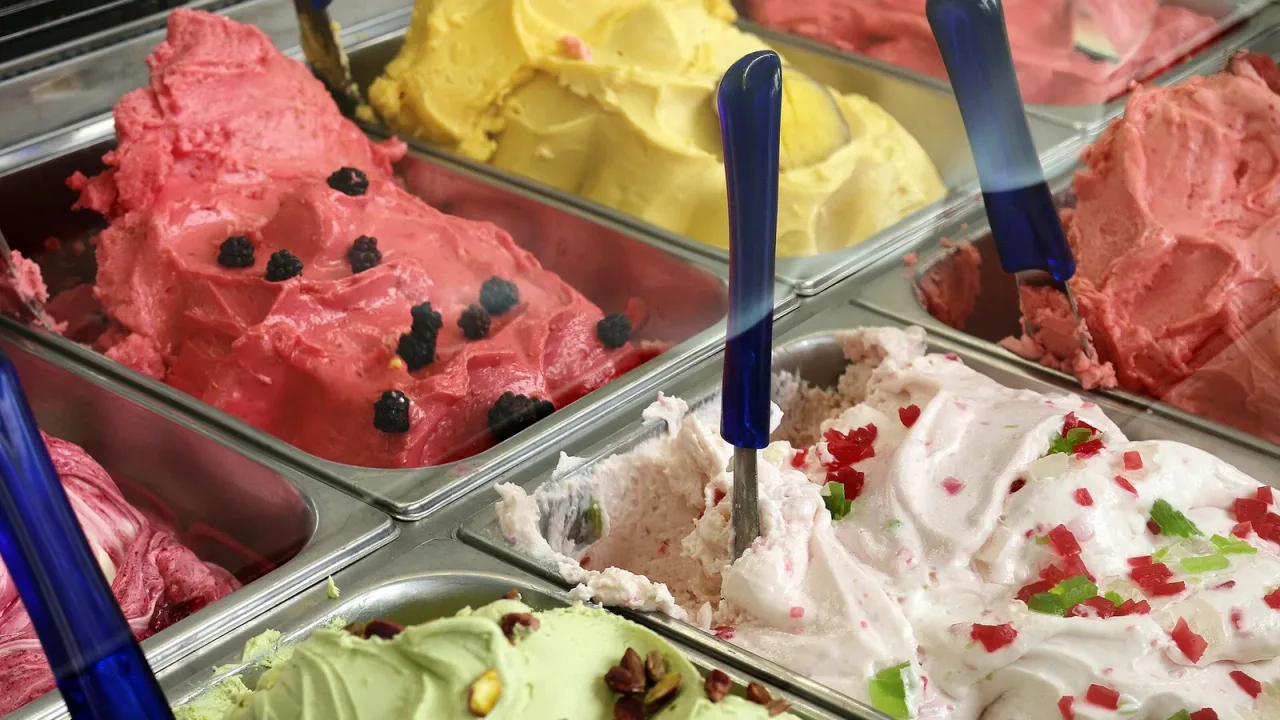
The cooling sensation from ice cream is entirely real. It comes from cold receptors in the mouth and the gastrointestinal tract: they respond to the low temperature and signal to the brain that things have got easier.
Why that signal is misleading is explained by neuroscientist Peter Poortvliet of the University of Queensland in an article for The Conversation.
What happens after the first spoonfuls
As soon as the body starts breaking ice cream down, the cooling disappears. Most varieties are based on milk fat and sugar, and breaking fat down releases a noticeable amount of heat.
The result is the opposite effect: the initial cooling is quickly replaced by the heat that digestion itself produces. The more calorie-rich the food, the more heat the body gains from digesting it — and in hot weather that works against us.
Cold drinks carry the same trap
A glass of iced water also gives only a momentary effect: a small portion warms up quickly from the surrounding organs. A large amount of cold liquid slows the blood flow, and with it the transfer of heat out of the body.
The relief we feel is mostly explained not by a drop in temperature but by ordinary rehydration: the body cools itself through sweat, and for that it needs water.
The paradox: hot cools better
Warm drinks and spicy food act on the receptors of the mouth and throat in a way that triggers sweating — the most effective cooling mechanism a human has. In the heat an adult can lose up to a litre and a half of sweat an hour.
Alcohol, by contrast, works against you: it acts as a diuretic, dehydrates, and impairs the body's ability to shed heat.
What scientists actually tested
The study behind the viral claim is not about ice cream but about ice slurry — a mixture of fine ice and liquid, with almost no fat or sugar. It is drunk before physical exertion in a heated room.
Such a drink does lower body temperature more than merely cool liquid and improves thermal comfort — as shown, among others, by a study in the journal Building and Environment. But the key condition is the ice itself, which absorbs heat as it melts, without a calorie-rich base that later gives that heat back.
Nota bene
Bucha FM is an independent news site and station for the Bucha district. We cover what matters to the community, and we work for you — and because of you. Joining the people who make this possible is simple: support us with any amount.


Comments
No comments yet — be the first.